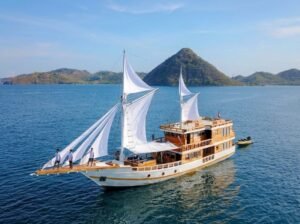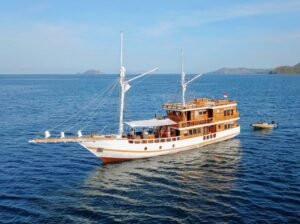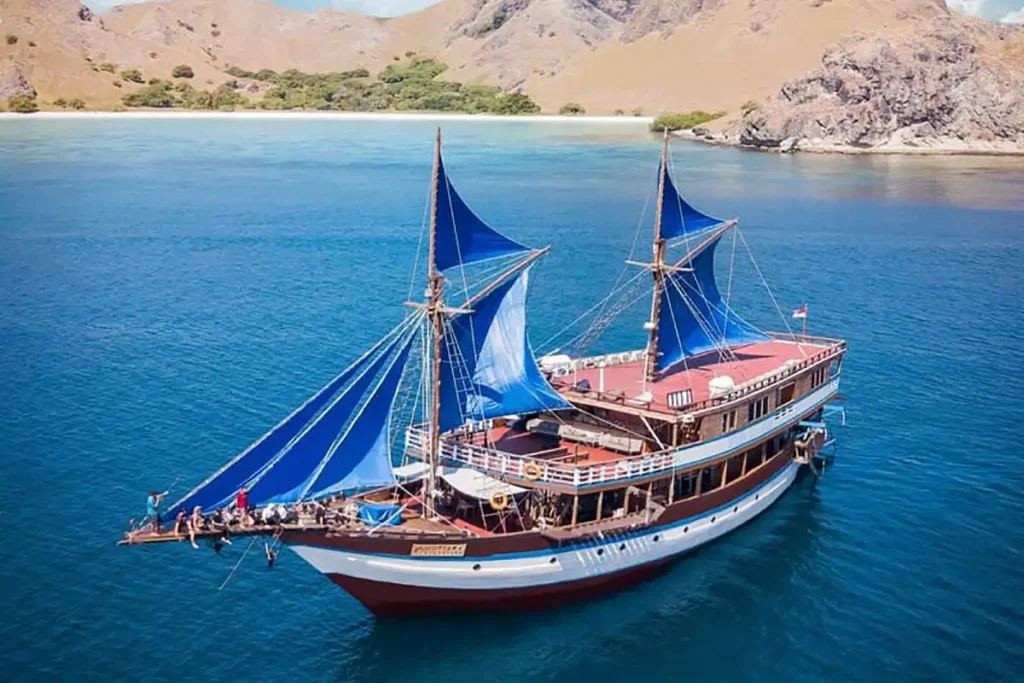
Phinisi boat feels like a memory that hasn’t happened to you yet. A slow-moving image of wood, wind, and saltwater silence. Phinisi boat carries something old in its structure, something almost stubborn in the way it still exists in a world full of fiberglass speedboats. And somehow, Phinisi boat doesn’t feel outdated. It feels intentional. Like it chose to stay the same while everything else rushed forward. You look at it and think… why does this still feel so alive?
There’s a moment, usually right before sunset, when a Phinisi boat doesn’t look like transport anymore. It looks like a floating pause. The sea around it doesn’t feel like distance—it feels like time stretching.
Maybe that sounds dramatic. But stand on the deck long enough, and you’ll notice something odd: nobody really talks much at first. They just watch. And breathe.
The Wooden Soul Behind Phinisi Boat Tradition
A Phinisi boat is not just built; it is assembled like a memory passed between generations. In South Sulawesi, especially around the Bugis and Konjo shipbuilders, this tradition has been carried for centuries. No modern shortcuts, or at least not in spirit. Even when tools changed, the mindset didn’t fully shift.
On a Phinisi boat, the wood matters. The joints matter. Even the smell after rain matters more than you expect it to. Some builders still say the boat “tells them” how it wants to be shaped. That might sound poetic, or maybe just tired folklore—but then you see the symmetry of it floating, and you hesitate to dismiss it completely.
In places like Phinisi Labuan Bajo, these vessels have become more than cultural artifacts. They’ve become living spaces. Moving hotels. Slow storytellers across the Komodo waters.
And yet, there’s a strange contradiction here: the more luxurious the upgrades, the more people still search for authenticity in the original Phinisi boat experience.
Sailing Between Islands Without Rushing Anything
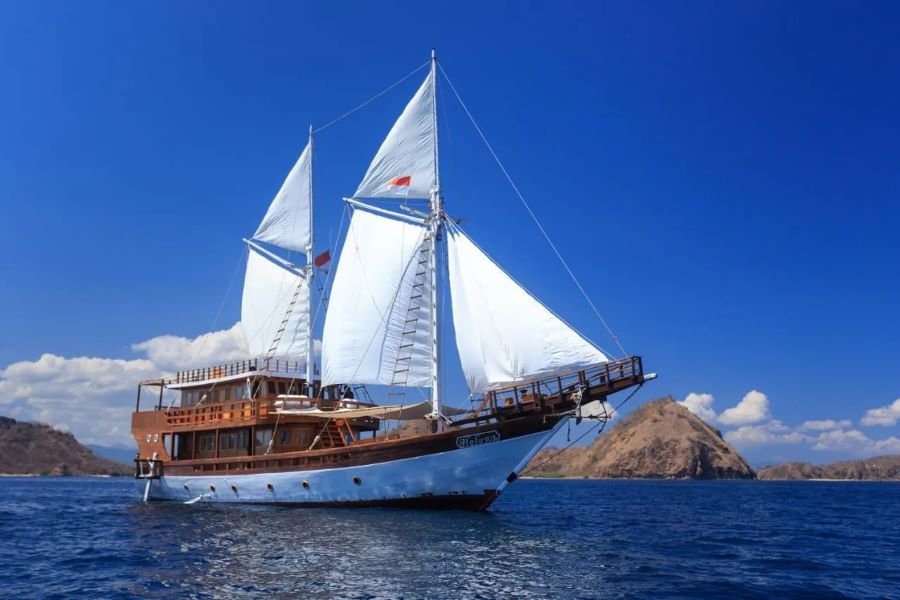
Aboard a Phinisi boat, time doesn’t behave normally. You might plan to sleep early, but then the ocean changes color and suddenly it feels wrong to go inside.
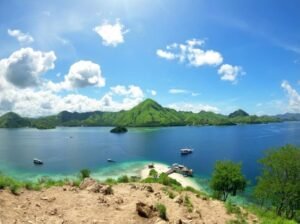
The route from sailing Lombok to Labuan Bajo is often described as scenic, but that word feels too clean. Scenic sounds like something you can frame and forget. This is different. It lingers.
On a Phinisi boat, you don’t just pass islands—you notice how each one has a different silence. Some are sharp and windy. Others feel heavy, almost sleepy.
Someone once said travel like this is inefficient. Maybe they’re right. The speed is slow. The stops are unpredictable. But the mind… it starts to stretch in ways that fast travel never allows.
And you begin to wonder: do we actually want efficiency, or do we just fear stillness?
Luxury Liveaboard Life That Doesn’t Feel Rushed
Modern Phinisi boat experiences often fall under the category of luxury liveaboard. White sheets, private cabins, curated meals. Everything arranged, yet still floating in the unpredictable sea.
There’s something slightly ironic about that. Luxury trying to behave like nature. Or maybe nature being invited into luxury.
On a Phinisi boat, even a luxury one, you still hear the water. Constantly. It taps against the hull like a reminder that nothing here is static. Even sleep feels different. Not deeper, not lighter—just… aware.
Some guests expect perfection. But perfection isn’t really the point. A Phinisi boat doesn’t promise control. It offers presence. And sometimes, that’s harder to handle than discomfort.
The Quiet Rhythm of Komodo Waters
A Phinisi boat drifting near Komodo waters creates a rhythm that’s hard to describe. Not waves exactly. Not wind either. Something in between.
People often ask what there is to do on a Phinisi boat for days at sea. The answer sounds vague: nothing, and everything. You swim, maybe. You eat when food appears. You watch clouds without assigning meaning to them.
And sometimes you just lean on the railing, thinking about nothing productive at all.
There’s a small moment I remember—though it might be imagined—where someone on deck asked what time it was. No one answered immediately. Not because they didn’t know, but because it didn’t feel necessary.
That’s the kind of subtle shift a Phinisi boat creates. Time becomes optional information.
Between Tradition and Modern Comfort
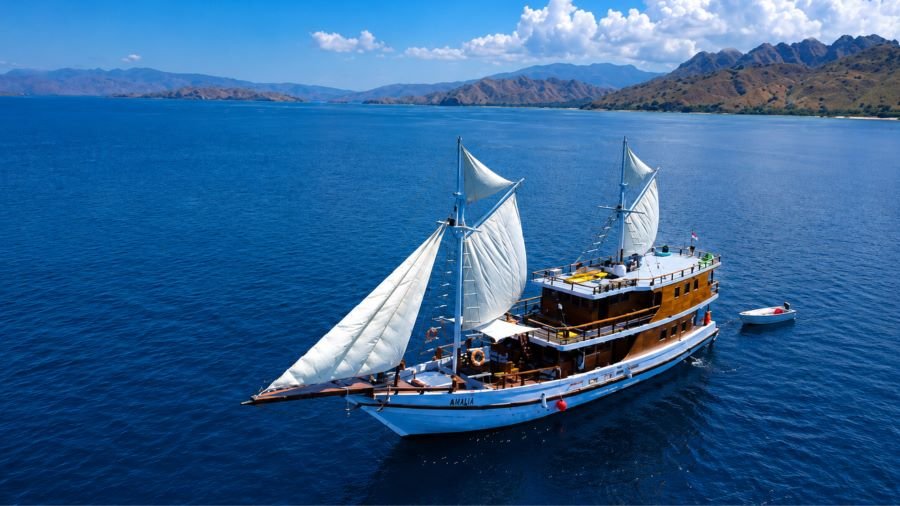
Not every Phinisi boat feels the same. Some are raw and traditional. Others are polished, almost like boutique hotels on water.
The tension between these versions is interesting. Too traditional, and some travelers feel uncomfortable. Too modern, and others feel it loses its soul.
Still, both exist side by side in places like Labuan Bajo. Especially in the growing world of Phinisi Labuan Bajo tourism, where expectations vary wildly.
And yet, whether simple or refined, the structure underneath remains the same: wood, sail, patience.
A Slow Unfolding of Perception
After a few days on a Phinisi boat, something subtle happens. People stop checking their phones as often—not because of signal issues, but because urgency fades.
Even conversations change. Less about planning, more about noticing.
Someone might say, “Did you see that island earlier?”
And another replies, “Which one?”
And then a pause. Because honestly, there were many islands, and they all blurred into a kind of quiet continuity.
On a Phinisi boat, memory becomes less precise but more emotional. You don’t remember exact timestamps. You remember light. Wind. The sound of wood at night.
Sailing Routes That Feel Like Slow Revelations
The sailing Lombok to Labuan Bajo journey often surprises first-time travelers. They expect movement. They don’t expect immersion.
A Phinisi boat doesn’t just transport—it reshapes attention. Even small things become noticeable. The way coffee tastes slightly different at sea. The way sunrise feels louder than expected.
There’s no dramatic turning point. No single moment where everything changes. Instead, it’s gradual. Almost invisible.
And then suddenly you realize—you’ve stopped thinking about leaving.
The Emotional Weight of Stillness at Sea
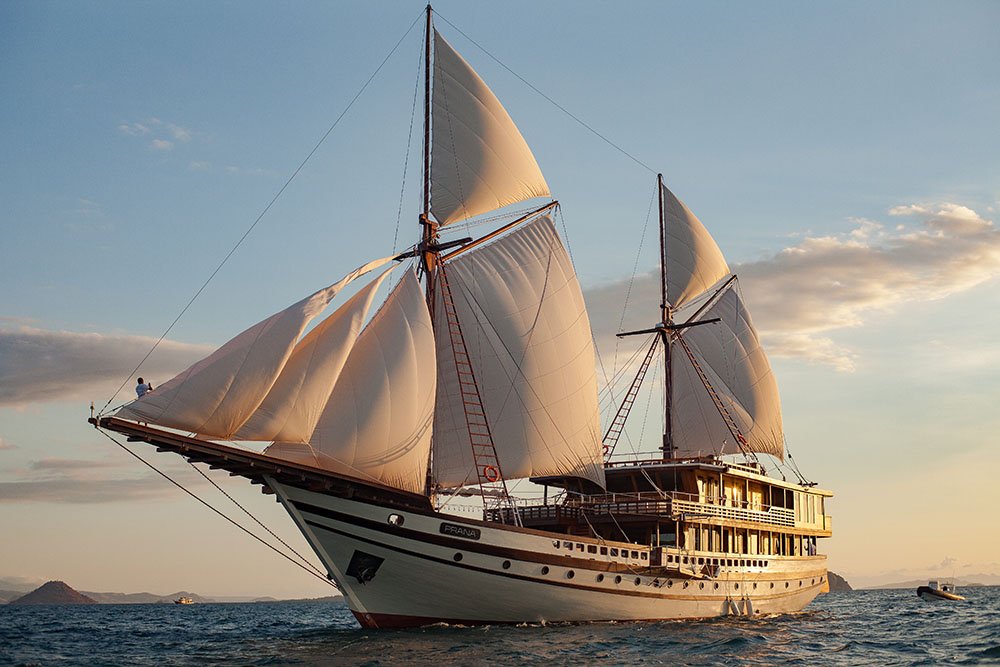
A Phinisi boat has a strange emotional effect. Not always joy. Not always calm. Sometimes it’s a quiet discomfort, like you’ve stepped out of a fast world and haven’t fully adjusted yet.
People don’t always talk about this part.
Luxury liveaboard brochures rarely mention it. But it exists. That moment when silence feels too large, and you’re not sure what to do with it.
And then, slowly, you adapt.
The sea teaches without speaking. A Phinisi boat just carries you through it.
Why People Return Again and Again
Many travelers who experience a Phinisi boat once end up returning. Not always immediately. Sometimes years later.
They might not explain it clearly. “It was nice,” they’ll say. Or “different.” But that’s not quite accurate.
It’s more like a lingering texture in memory. Something unfinished.
Even Phinisi Labuan Bajo routes become more than destinations. They become reference points for how slow life can actually feel.
And strangely, that realization doesn’t fade quickly.
Final Reflection on Phinisi Boat Experience
A Phinisi boat is not trying to impress you. It’s not competing with speed or technology. It simply continues what it has always done—move with the wind, hold people in motion, and let silence expand naturally.
Maybe that’s why it stays memorable. Not because it is loud or dramatic, but because it is not.
And when you finally step off, land feels slightly too fast for a while.