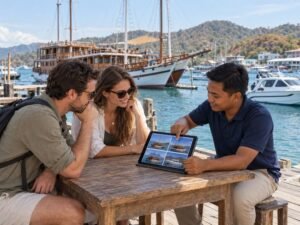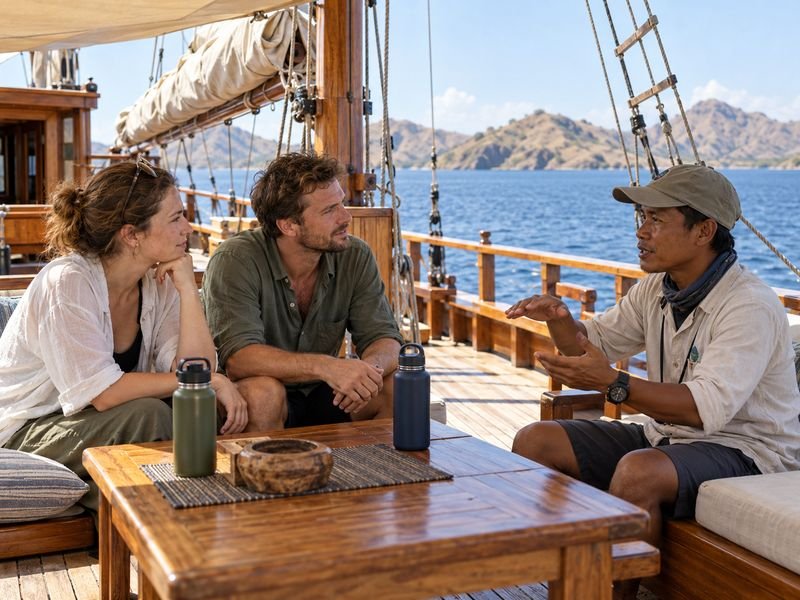
We like a good wildlife photograph as much as anyone. But if getting it means pushing a dragon to move or swimming after a manta, we’ll happily come home without it. That’s our starting point when someone asks what makes a komodo tour ethical.
You don’t have to give up the sailing holiday you’ve been imagining. A comfortable cabin and time at Pink Beach can sit quite happily alongside sensible boundaries. The real question is what happens when your wish list runs into an animal’s space or a change in the weather.
That’s where the decisions count.
What makes a Komodo tour ethical?
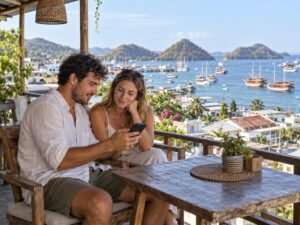
A boat photograph won’t answer this. Neither will the word “eco” tucked beside a booking button, however reassuring it looks after an evening spent comparing trips on your phone.
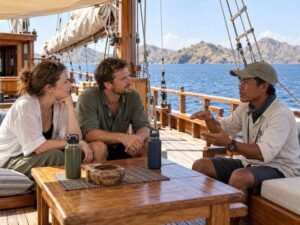
We’d look for explanations you can understand. Who leads the dragon walk? What happens if a snorkelling stop isn’t suitable? Where does the rubbish go once everyone has finished lunch?
Those aren’t awkward questions. When you browse our Komodo tour packages, you’re welcome to bring them into the conversation alongside your questions about cabins. Both affect the holiday you’re buying.
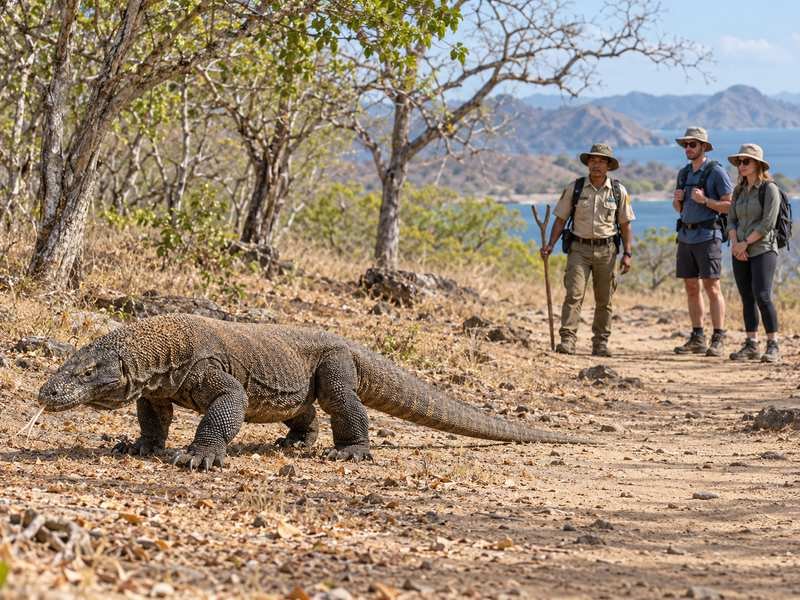
The dragon doesn’t owe us a performance
Perhaps you’ve already pictured the shot. A dragon in the foreground, a little dry grass behind it, and you somewhere safely in the frame. We understand the appeal.
But the photograph has to work around the animal. During a dragon visit, an authorised park ranger or naturalist guide leads the walk and gives instructions about keeping your distance. We’d let them decide where the group stands.
A resting dragon can stay resting. Feeding it or trying to make it move for the camera crosses a line, even if somebody insists the resulting video will be amazing.
If you’ve searched “komodo tour unethical” after seeing a troubling clip, that concern is reasonable. You don’t need to dismiss every trip to Komodo, but you can be very clear about the behaviour you won’t take part in.
Respecting that space helps keep your Komodo tour ethical.
What if there are no mantas?
Then there are no mantas. It’s disappointing if that was your biggest hope, and there’s no point pretending otherwise.
Still, a named stop on an itinerary isn’t an appointment with a wild animal. Mantas may not appear, and conditions may mean the guide decides against entering the water at all.
If they do appear, we’d give them room to pass without chasing or blocking their route. You can miss a close photograph and still have had a lovely encounter.
For anyone considering a Komodo day trip, this is worth talking through before departure. A short visit can feel surprisingly pressured if you’ve decided every stop must deliver exactly what you saw online.
There’s no shame in staying aboard, either. Being uncomfortable in the water isn’t something you have to hide just because the rest of the group looks eager.
Keeping a Komodo tour ethical sometimes means letting a sighting go.
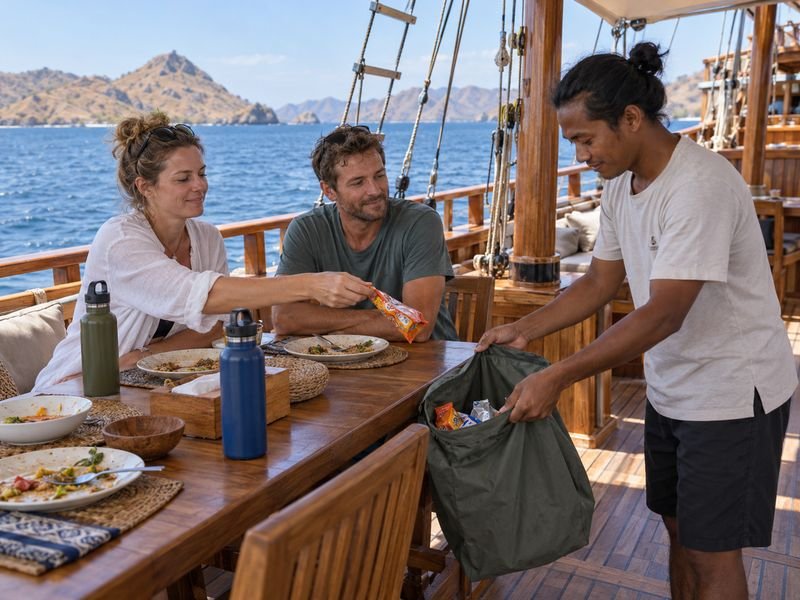
Lunch is finished and the packaging is still here
This part rarely makes the holiday reel. A snack wrapper blows across the deck, or an empty bottle rolls underneath a seat while everyone is getting ready for the next stop.
Small things, yes. But they’re part of running a trip.
We want waste secured aboard and taken ashore for appropriate disposal. Before choosing a boat, we’d also want a clear answer about wastewater handling; carrying a reusable bottle doesn’t settle that question.
These everyday choices help make a Komodo tour ethical.
While comparing the Komodo trip price, give yourself time to read the inclusions and understand which charges are separate. A low figure with unanswered questions isn’t much help when you’re trying to plan a budget.
The same goes for comfort. If AC is included, it’s fair to discuss when it operates, especially if you know you’ll struggle to sleep in a warm cabin.
Shared bathrooms deserve a mention too. We don’t think wanting a comfortable night makes you less adventurous; it simply helps the team suggest a boat that suits you.
Sometimes the best answer is to change the plan
Imagine you’ve set your heart on Padar in the early light. Then the route changes, and that particular morning is gone. Of course you’d feel disappointed.
A flexible plan can help keep your Komodo tour ethical.
We wouldn’t expect you to celebrate it. But the crew must be able to respond to sea conditions, and harbourmaster directions or government restrictions can affect whether a trip departs or where it goes.
Even with a Kelor Island day trip, we’d talk about the landing and the walking involved before assuming everyone in your group will enjoy the same activities.
Having fewer stops on paper doesn’t automatically make an outing easy. A family with young children may want a different pace from a couple who are happy to spend most of the day moving.
And if you’ve booked a flight soon after the sailing trip, that deserves a conversation before payment. We’d leave breathing room where possible; a delayed return is stressful enough without watching the clock for check-in.
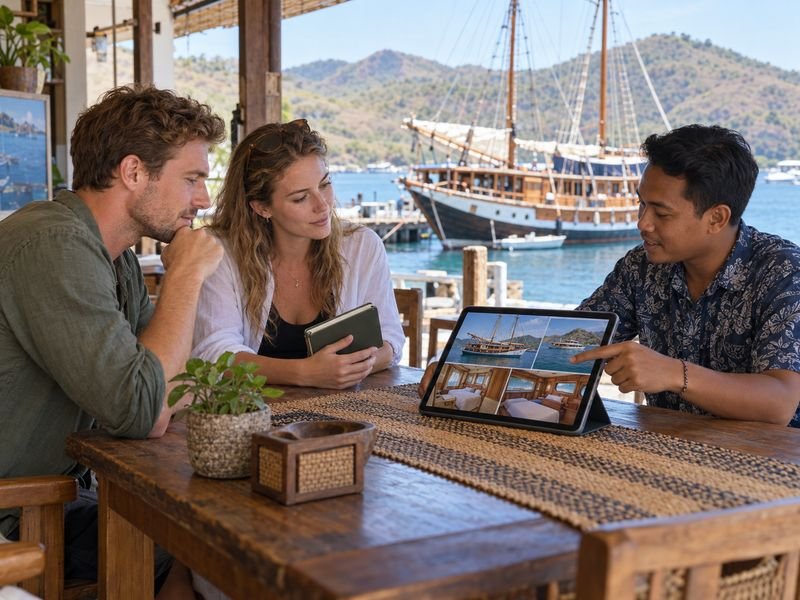
Have the slightly boring conversation before booking
Ask how changes and cancellations are handled. The answer is easier to take in while you’re still choosing dates than when you’re standing at the harbour with your bag.
We also suggest discussing the actual boat and cabin arrangement. “Private” might sound perfect, but it doesn’t tell you whether the sleeping setup suits your family or whether the bathroom is shared.
If you’re researching Komodo tour package from Labuan Bajo price, bring those practical questions into the comparison. You’ll have a clearer idea of what you’re paying for, beyond a similar-looking route on a map.
Drone footage is another detail to clarify. We’d treat it as conditional on permission and suitable conditions, even when documentation appears among the package facilities.
Is visiting Komodo wrong in itself?
No. We think it’s more useful to look at how a visit is run, including whether guests accept wildlife boundaries and whether the crew can change activities when necessary.
Does a private boat make the trip more responsible?
Not by itself. We’d be just as concerned about someone chasing a manta from a private boat as from an open trip, regardless of how much the booking cost.
Can a family take this kind of trip?
Possibly, yes. Tell us the children’s ages and how comfortable they are in the water, so we can discuss suitable boat arrangements without assuming every activity will fit.
Should we skip the trip if sightings aren’t guaranteed?
Only if a particular sighting is your sole reason for going. We love the time aboard too, and we’d hate for you to buy a sailing holiday you’ll judge entirely by one absent animal.
Bring us your questions
If you’re still wondering how to keep your Komodo tour ethical, you don’t have to solve everything alone before getting in touch. Start with your dates and the part of the trip you’re most unsure about.
At Sailing Labuan Bajo, we can discuss available trip types and boat options around those details. The pickup point and proposed itinerary should be clear before booking, with current weather conditions part of that conversation.
Book through our official website when you’re comfortable with the arrangements. We’d much rather help you choose a trip that fits than have you arrive expecting a holiday the sea and wildlife were never going to promise.