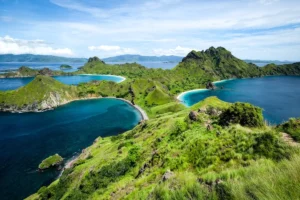
People often ask me what it’s really about Padar Island. Not the brochure version. Not the checklist. I mean the feeling you get when the boat engine slows down, the wind changes direction, and for a second you’re not sure whether to grab your camera or just sit there. That moment—quiet, slightly awkward, honest—that’s where this story begins.
Talking about Padar Island is tricky. Words want to line up neatly, but the island doesn’t cooperate. It interrupts you. It makes you pause mid-thought. And sometimes, it repeats itself in your head later, from a different angle.
You might arrive while sailing Labuan Bajo, or after days of sailing Lombok to Labuan Bajo on a wooden deck that smells faintly of salt and coffee. Maybe you’re on a liveaboard, maybe not. Either way, Padar has a way of meeting you halfway—and then stepping back, just to see what you’ll do next.
About Padar Island and Its Shape-Shifting First Impression
Let’s start simple. Or try to.
Padar Island sits inside Komodo National Park, wedged between Komodo and Rinca, but it doesn’t behave like a “middle child.” From the sea, it looks dry, almost shy. Brownish hills. Sharp ridgelines. Nothing lush, nothing dramatic—until you’re closer.
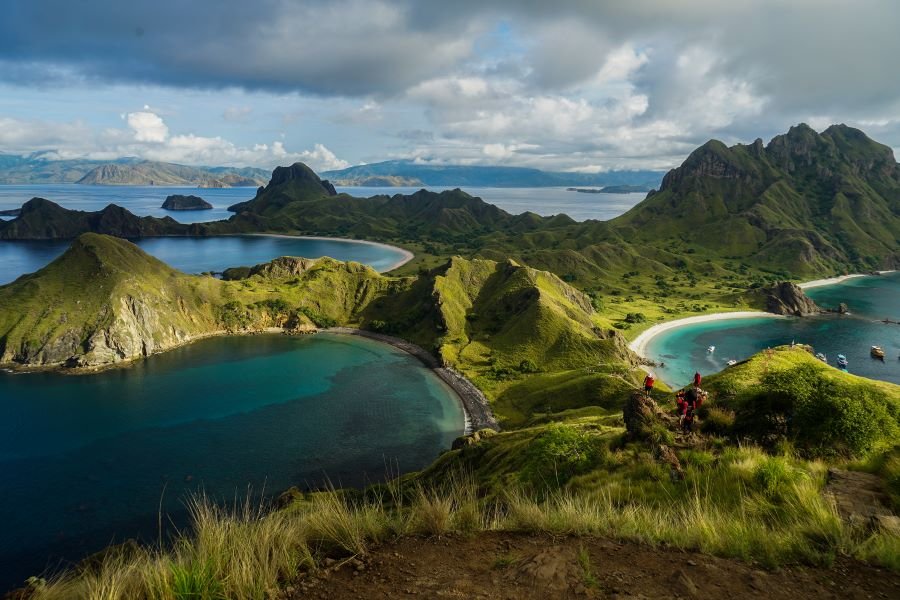
This is usually where people start explaining about Padar Island in terms of viewpoints. Three bays. Different colored beaches. A hike. Yes, all of that is true. But it’s not the whole truth.
Because when you step onto the island, the ground crunches differently than you expect. Not sand, not soil. Something in between. The heat feels direct, unapologetic. And there’s this odd thought—Did I underestimate this place? I did. The first time, at least.
You’ll notice it’s quiet. No birds screaming for attention. No trees waving dramatically. Just wind, slow clouds, and your own breathing becoming louder as the trail climbs.

The Climb That Changes Its Mind Halfway Up
Here’s the thing. The hike is short. On paper.
People like to talk about Padar Island as if the viewpoint is the destination. But the climb itself… it hesitates. It curves. It makes you stop for reasons that don’t feel practical. A loose stone. A sudden view. Sweat in your eyes.
About ten minutes in, you’ll think, Okay, I get it. Another ten minutes later, you’ll realize you didn’t. The bays start separating themselves visually, like someone slowly adjusting focus on a camera lens. One beach looks pale, another darker, another almost pink under certain light.
I remember stopping, not because I was tired, but because I wasn’t sure what to do with my hands. Phone? Water bottle? Just stand?
That uncertainty shows up again and again when you’re learning about Padar Island. It doesn’t rush to impress. It waits.
About Padar Island From the Waterline
Let’s rewind.
Before the hike, before the sweat and the panoramic silence, there’s the approach. If you’re coming by liveaboard, mornings blur into one another in a good way. Soft engine noise. Cups clinking. Someone pointing quietly toward the horizon.
Approaching Padar by boat adds a layer to what you understand about Padar Island. From the waterline, the island feels folded, like a piece of fabric not fully laid out. Coves hide behind headlands. Beaches appear and disappear depending on where you’re standing—or floating.
During sailing Labuan Bajo routes, Padar often becomes a pause. Not a climax. A breath between places. And that’s important. It lowers your expectations just enough for the island to slip past them.
I once thought the best view of Padar was from the top. Later, I changed my mind. Then I changed it again.
Repeating the Same Thought, Differently
Here’s a strange observation. People often describe Padar with certainty. But the longer you sit with it, the more that certainty dissolves.
When I explain about Padar Island to friends, I notice myself repeating ideas. The dryness. The colors. The quiet. But each time, I mean something slightly different. Dry as in harsh. Dry as in honest. Quiet as in empty. Quiet as in full.
This happens to a lot of travelers, especially those who arrive after sailing Lombok to Labuan Bajo. Days at sea recalibrate your senses. You’re already slower. Already less impressed by noise. Padar meets you there, not where you were before.
And yes, you’ll probably take the photo. Everyone does. But the photo won’t show the hesitation before the shutter clicks. Or the way the wind tugs at your shirt like it wants to say something.
About Padar Island Without Trying to Sell It
Let’s avoid turning this into a pitch.
There’s no need to frame about Padar Island as something you must do, must see, must conquer. It’s not that kind of place. It doesn’t reward efficiency. If anything, it quietly punishes it.
I’ve seen people rush the hike, get the shot, rush back down. They leave with proof, but not much residue. Others linger, sit on a rock that isn’t particularly comfortable, and stare too long at one bay. Those are the ones who seem different afterward. Subtly. Hard to explain.
Maybe that’s why Padar keeps showing up in conversations long after the trip ends. Not as a highlight, but as a reference point. Remember how it felt up there?
The Light Does Most of the Talking
Midday light is blunt. Morning light is forgiving. Late afternoon? That’s when Padar softens.
Understanding about Padar Island also means understanding timing. The hills catch shadows that redraw the landscape every hour. What looked sharp becomes gentle. What felt dry starts glowing.
If you’re anchored nearby on a liveaboard, you’ll notice how the island changes even when you’re not on it. From the deck, with a cup of something warm, Padar looks calmer. Almost reflective. Like it’s replaying the day back to you.
I’ve caught myself thinking, It didn’t look like that earlier. Then realizing—no, it did. I just wasn’t ready to see it that way yet.

About Padar Island as a Mental Afterimage
This might sound inefficient, but stay with me.
Long after you leave, Padar lingers. Not as a clear picture, but as fragments. A ridge line. The sound of wind. The feeling of standing still while everything else moves slowly around you.
When people ask me again about Padar Island, weeks or months later, I pause. There’s a gap. A small doubt. Did I really understand it then? Or only later?
This happens often to travelers who spend extended time sailing Labuan Bajo waters. Islands blur together, but Padar doesn’t blur. It fades in and out, like a thought you almost forget and then suddenly remember in detail.
Why Coming by Sea Matters (Even If You Can’t Explain Why)
You could arrive quickly. Technically. But arriving after sailing Lombok to Labuan Bajo changes the scale of everything. Your body is already tuned to waves, to waiting, to not knowing exactly what day it is.
In that state, learning about Padar Island feels less like consuming information and more like noticing. You notice how the trail isn’t straight. How the bays don’t mirror each other. How your expectations keep adjusting without permission.
This is why so many people choose a liveaboard without fully articulating the reason. It’s not about convenience. It’s about tempo. Padar responds better to those who arrive slightly undone.
Coming Back to the Same Idea, One Last Time
So what is it really about Padar Island?
It’s about restraint. About a place that shows you just enough and then waits. About repeating the same view until it means something new. About standing on a ridge and realizing the island isn’t performing—it’s existing.
You might visit once. You might talk about it twice. But it will revisit you quietly, in moments that seem unrelated. That’s the part no guide mentions.
And maybe that’s enough.