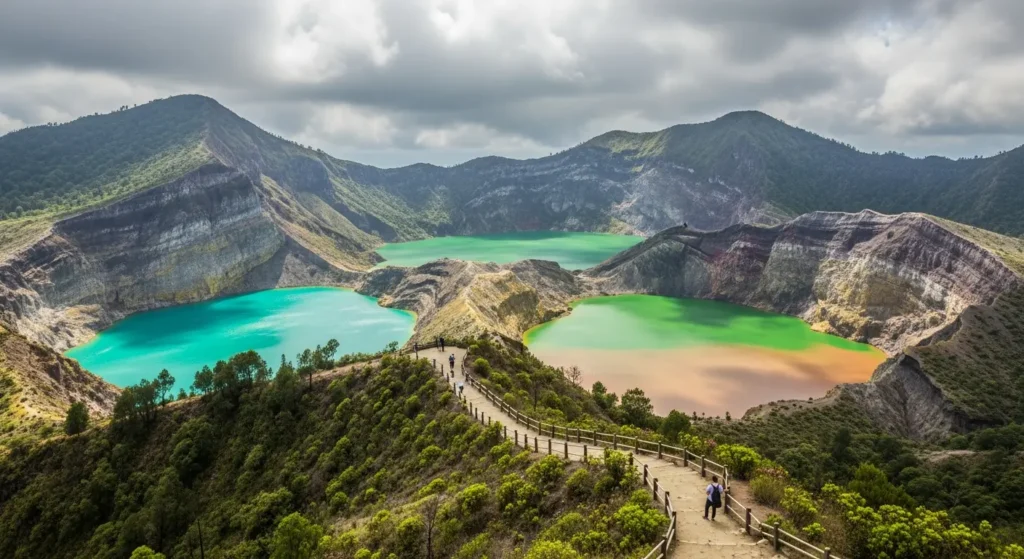
I didn’t take a photo right away at Kelimutu Lake.
That surprises people when I tell them. Three crater lakes, different colors, sunrise light—usually that’s a recipe for frantic camera clicks. But when I first saw Kelimutu Lake, I just stood there, slightly confused.
One lake looked blue. Not ocean blue. Not sky blue. Something softer, like diluted paint. The second leaned green, but not the tropical kind you see in travel ads. The third… I hesitated. Brown? Red? Rust? It was a color I couldn’t name properly.
And that bothered me more than I expected.
The Uncomfortable Beauty of Kelimutu Lake
We had left Moni before dawn, driving into Mount Kelimutu National Park while most windows in the village were still dark. I remember a dog trotting across the road and disappearing into the mist. The headlights caught particles in the air—dust or fog, I couldn’t tell.
The walk to the viewpoint wasn’t dramatic. A paved path. Some stairs. The usual half-asleep silence of travelers questioning their alarm clocks.
At the top, there wasn’t applause. No one gasped theatrically. People just… adjusted.
Kelimutu Lake revealed itself slowly, like it wasn’t entirely convinced we deserved the full view.
That’s when I noticed something odd: the three lakes didn’t look harmonious. They looked slightly out of sync. As if each crater belonged to a different season.
It wasn’t postcard-pretty in a symmetrical way. It was irregular. Uneven. Honest.
Why the Colors Don’t Stay Still
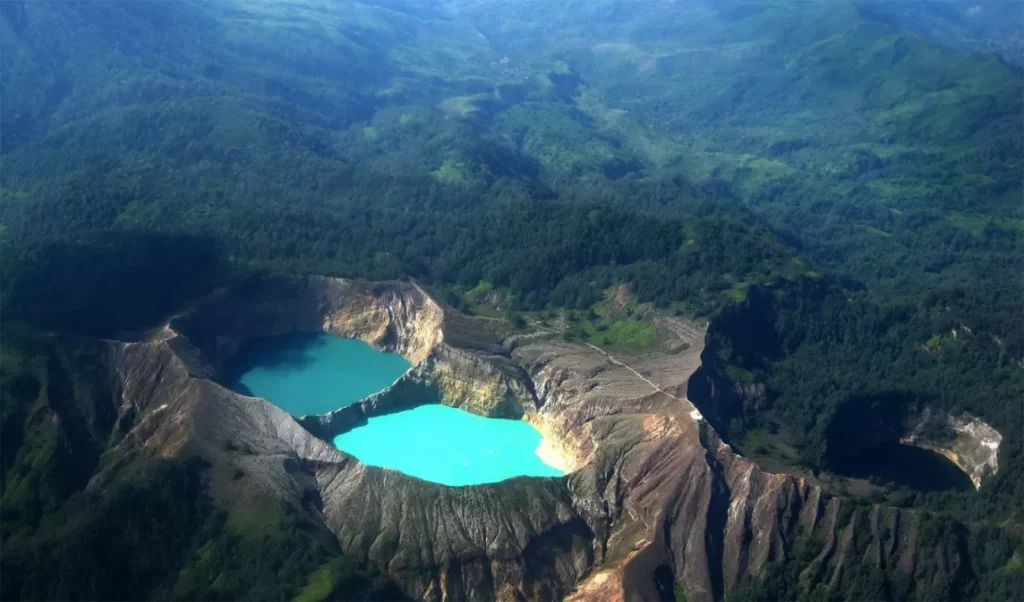
Everyone mentions that the Kelimutu Three-Colored Lakes change shades over time. The reason is scientific—volcanic gases rising through fissures, minerals reacting, oxidation levels shifting beneath the surface.
Iron. Sulfur. Manganese.
But standing above Kelimutu Lake, you don’t see chemistry. You see unpredictability.
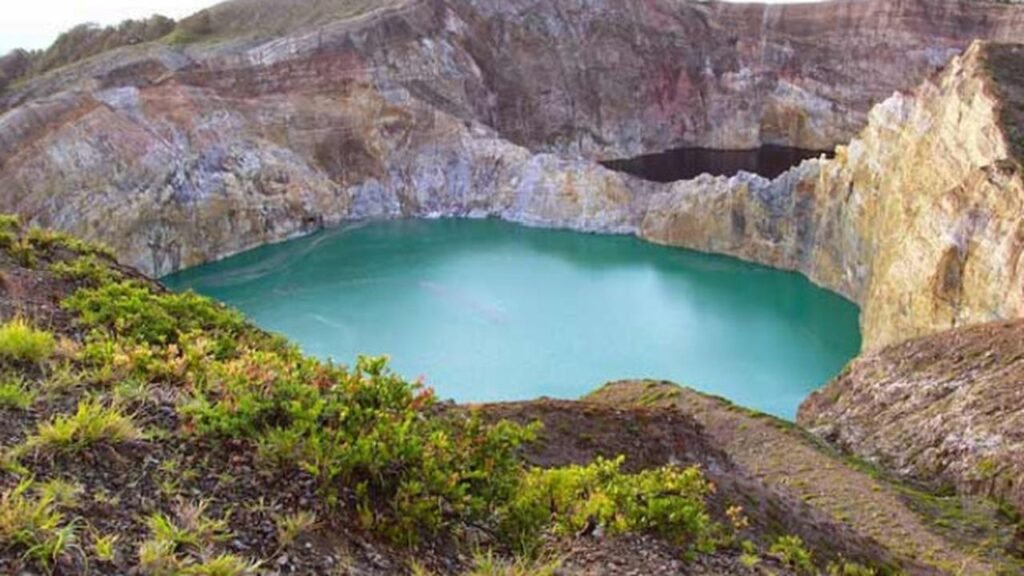
A local guide told us one of the lakes had turned nearly black a few years back. Another shifted from turquoise to pale jade within months. No warning. No explanation posted on a signboard.
The mountain doesn’t consult anyone before changing its mood.
And maybe that’s what makes Kelimutu Lake so unsettling in a quiet way. It refuses to settle into one identity.
A Belief That Lingers in the Air
The Lio community believes the lakes hold the souls of the departed—separated by age and character. One for elders. One for young souls. One for those who carried heavier burdens.
You don’t have to adopt the belief to feel its presence.
There’s a small stone structure near the viewing area. I almost missed it because I was too focused on the water. A woman near me placed something small beside it—flowers, maybe. She didn’t explain. She didn’t need to.
Kelimutu Lake isn’t treated like a spectacle by everyone who comes. For some, it’s remembrance.
That changes the atmosphere.
From Saltwater to Still Water
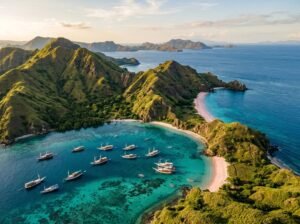
A few days earlier, I had been in Labuan Bajo. Completely different rhythm. Boats lining the harbor. Travelers comparing diving footage. Plans for sailing Labuan Bajo routes through Komodo National Park.
I joined a liveaboard for two nights. The deck smelled faintly of fuel and salt. At night, the stars felt close enough to press against. There was constant motion—the sea lifting and lowering us without pause.
Then Flores shifted inland.
The road toward Moni twisted through hills and small settlements. Laundry hung low between trees. Smoke drifted from cooking fires. Time felt less measured.
By the time I stood above Kelimutu Lake, the silence felt amplified because of those earlier days at sea.
Sailing Labuan Bajo energizes you. Kelimutu Lake slows you down.
The contrast isn’t subtle. It’s almost physical.
Waiting for the Fog to Decide
On my visit, clouds didn’t behave politely. One of the lakes disappeared under a layer of mist just as the sun rose higher. People shuffled along the railing, trying to outmaneuver the weather.
For a moment, I felt annoyed. We had woken up early for this.
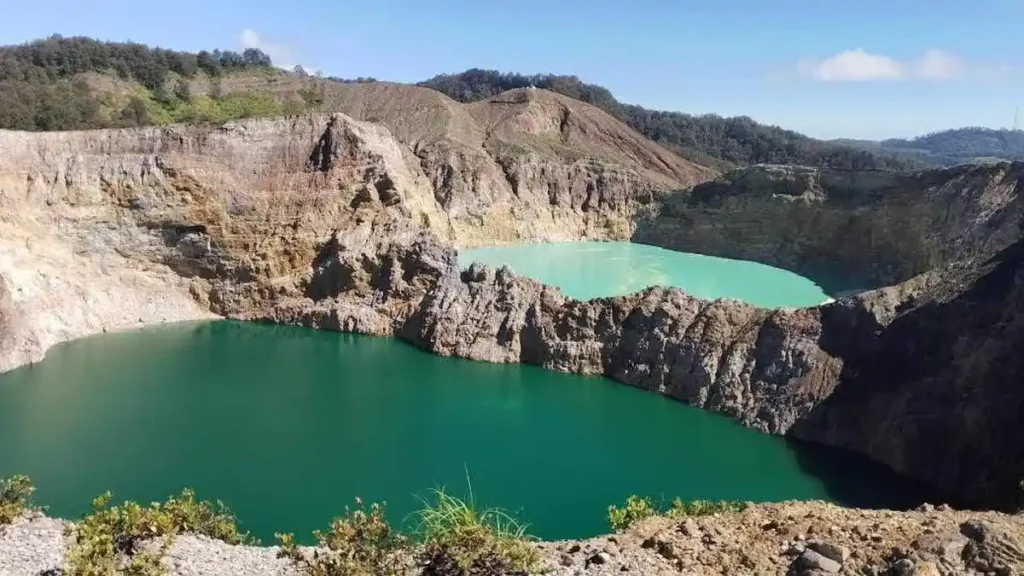
Then I noticed something: the partially hidden lake looked more mysterious than the fully visible ones. The fog softened its edges. The color beneath seemed deeper because it wasn’t fully exposed.
Kelimutu Lake, when half-concealed, felt more compelling than when fully revealed.
That felt like a small lesson I wasn’t prepared for.
Details That Don’t Make It Into Brochures
The paint on the guardrails is chipped in places. There’s graffiti carved into a bench—initials layered over older initials.
A vendor near the entrance sells instant noodles and boiled eggs from a simple stall. Steam rises from plastic cups of coffee before sunrise. It smells faintly sweet and bitter at the same time.
None of these details are dramatic.
But they ground Kelimutu Lake in reality. It’s not floating in isolation. It’s embedded in daily routines.
And somehow, that makes the lakes feel less like a fantasy and more like something earned.
Trying to Explain Kelimutu Lake Later
When friends asked what Kelimutu Lake was like, I struggled.
“Yes, the colors are different,” I said. “And they change.”
But that wasn’t the full story.
What stayed with me wasn’t just the visual contrast. It was the waiting in the cold before sunrise. The way one lake looked dull at first and then suddenly brightened as light shifted. The uneasy feeling of not being able to name a color accurately.
Kelimutu Lake isn’t about perfection. It’s about variation.
Three lakes sharing one volcanic body, yet refusing to mirror each other. That detail keeps resurfacing in my mind. Same source. Different outcomes.
There’s something quietly reassuring about that.
If you’re already planning sailing Labuan Bajo or considering a liveaboard journey around Flores, make the inland detour. Not because it completes your itinerary. Not because it checks a box.
Because Kelimutu Lake offers a different texture of experience.
Less adrenaline. More reflection.
Stand there longer than necessary. Let the light change. Notice how the shades shift almost imperceptibly. Accept that you might not find the right word for what you’re seeing.
I still can’t fully describe that third color.
But I remember how it made me pause.
And sometimes, that pause is the most valuable part of travel.