The first time I searched for Kelor Island trekking difficulty, I expected to find a simple answer. Easy. Moderate. Difficult. Something clear enough to help me decide whether I needed proper hiking shoes or whether my usual travel sandals would be enough.
Instead, I found people describing what sounded like completely different hills.
One traveler said it was an easy walk.
Another said they were breathing hard halfway up.
A third person called it short but surprisingly steep.
At first I assumed someone was exaggerating. After visiting Kelor Island myself, I’m not so sure anymore.
Maybe they were all right.
The Hill Doesn’t Look Like Much at First
That contrast between appearance and reality is one reason why discussions about Kelor Island trekking difficulty often produce very different opinions among travelers.
That’s probably where the confusion begins.
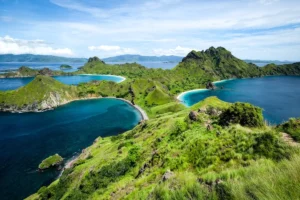
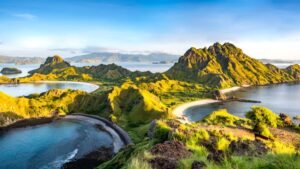
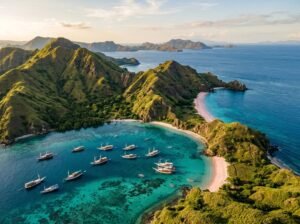
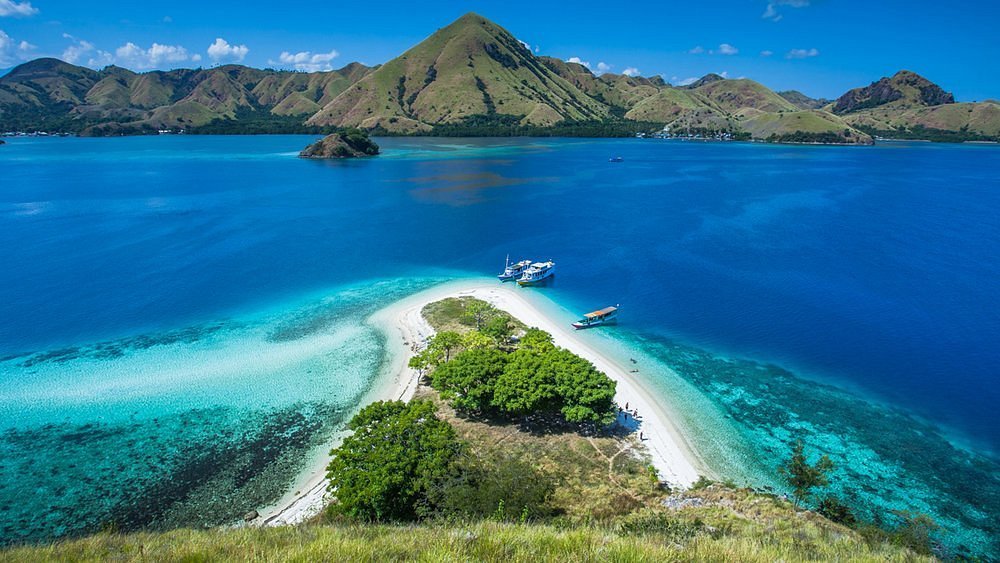
From the boat, Kelor Island appears almost harmless. The beach catches your attention before anything else. White sand. Clear water. The kind of color that makes everyone suddenly reach for their phone even though they’ve already taken fifty photos that morning.
The hill sits behind all that beauty looking fairly innocent.
I remember standing near the front of the boat thinking the climb couldn’t possibly take long.
Technically, I was correct.
But that wasn’t the important part.
A lot of people underestimate slopes when they’re surrounded by scenery. Maybe it’s because the ocean creates a sense of openness. Distances become harder to judge. Angles seem softer than they really are.
Whatever the reason, the hill felt noticeably steeper once my feet were actually on it.
Not dramatically steeper.
Just enough to make me reconsider my earlier confidence.
A Strange Thing Happens After Leaving the Beach
The beach puts you in a certain mood.
You’re relaxed.
You’ve probably been sitting on a boat.
Maybe you’ve spent the morning snorkeling.
Maybe you’ve been staring at islands drifting by for hours.
Then suddenly you’re climbing.
The transition feels abrupt.
In many ways, Kelor Island trekking difficulty is less about endurance and more about adapting to the steep incline right from the beginning.
There’s very little negotiation.
The trail doesn’t spend much time easing you into the experience. It simply begins heading upward, and your legs have to accept that reality.
I noticed several people stop within the first few minutes.
Not because they couldn’t continue.
Because they had expected something else.
That distinction matters.
When discussions about Kelor Island trekking difficulty appear online, I suspect many travelers are actually describing the surprise more than the physical challenge itself.
The hill catches people off guard.
And being caught off guard always makes something feel harder.
I Kept Looking Back More Than Looking Up
This sounds ridiculous now.
While climbing, I found myself turning around repeatedly.
Partly because the view was improving with every step.
Partly because looking uphill wasn’t particularly encouraging.
The strange thing was that every time I stopped, the ocean looked different.
A slightly different shade of blue.
A different angle of the shoreline.
A boat that seemed much smaller than it had a minute earlier.
None of these observations helped me reach the top faster.
But they made the climb more enjoyable.
Travel memories are funny like that. Sometimes the details you remember most are completely irrelevant to the destination itself.
I barely remember the exact length of the trail.
I remember the water.
People Talk About the Summit. They Rarely Talk About the Heat
Maybe because heat is difficult to photograph.
The sun can completely change how Kelor Island trekking difficulty feels.
A traveler arriving early in the morning may have a very different experience from someone climbing closer to midday.
I learned this accidentally.
During a conversation later that evening, another traveler described the hike as “pretty easy.”
For a moment I wondered if we’d climbed different hills.
Then I remembered they had arrived on an earlier boat.
Different time.
Different conditions.
Same trail.
The hill itself isn’t changing. The environment around it is.
And tropical heat has a way of quietly increasing effort without announcing itself.
You don’t always notice it immediately.
You notice it five minutes later.
The Funny Thing About Short Treks
People often assume short treks aren’t memorable.
I used to think that too.
Long hikes create stories. Long hikes create struggle. Long hikes create accomplishment.
At least that’s what I believed.
Yet months after visiting Komodo, I found myself mentioning Kelor Island surprisingly often.
Not because it was the hardest thing I did.
Not because it took all day.
Actually, the opposite.
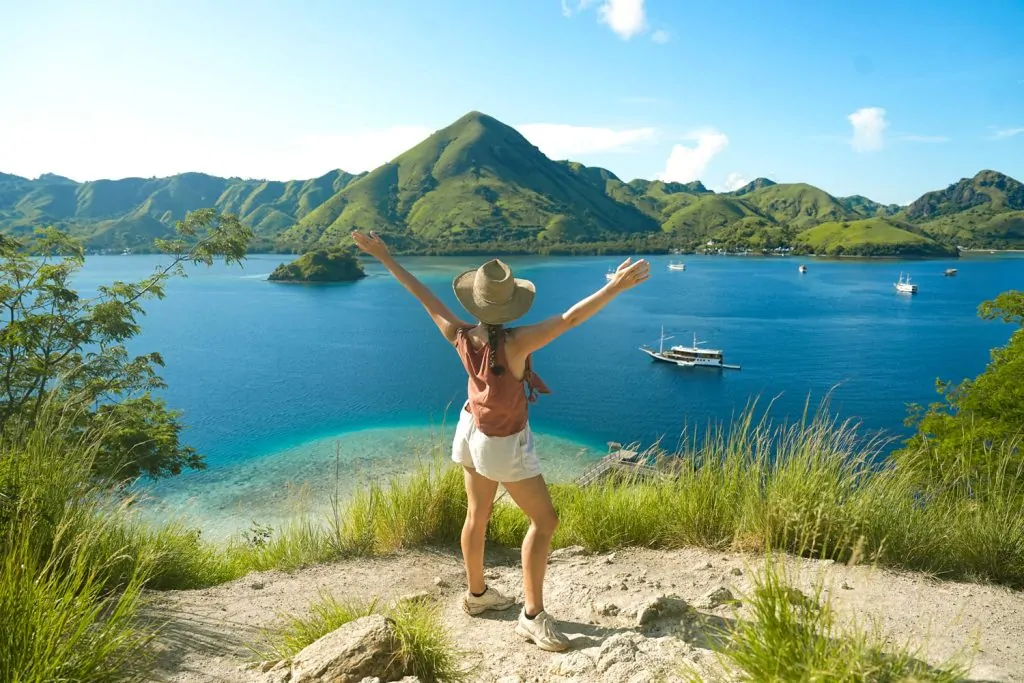
There was something satisfying about a climb that demanded effort but didn’t overstay its welcome.
Maybe that’s part of the appeal.
Kelor Island trekking difficulty sits in an unusual space where most travelers can complete the trail while still feeling they’ve earned the view.
That’s a difficult balance to achieve.
During a Sailing Komodo Trip, Everything Feels Slightly Different
Context changes experiences.
If you arrive by road somewhere, a hike is just a hike.
When you arrive after hours on the water during a sailing Komodo adventure, the same hill feels different.
Your body has been moving without moving.
You know that sensation?
You’ve been traveling all morning, yet you’ve mostly been sitting.
The climb becomes a welcome interruption.
A reason to stretch your legs.
A reason to feel the ground again.
I hadn’t expected that aspect to matter.
Apparently it did.
The View Isn’t What I Expected Either
Travel photography tends to create expectations.
Usually unrealistic ones.
I assumed the summit would be crowded with people taking identical photos and immediately heading back down.
There was some of that.
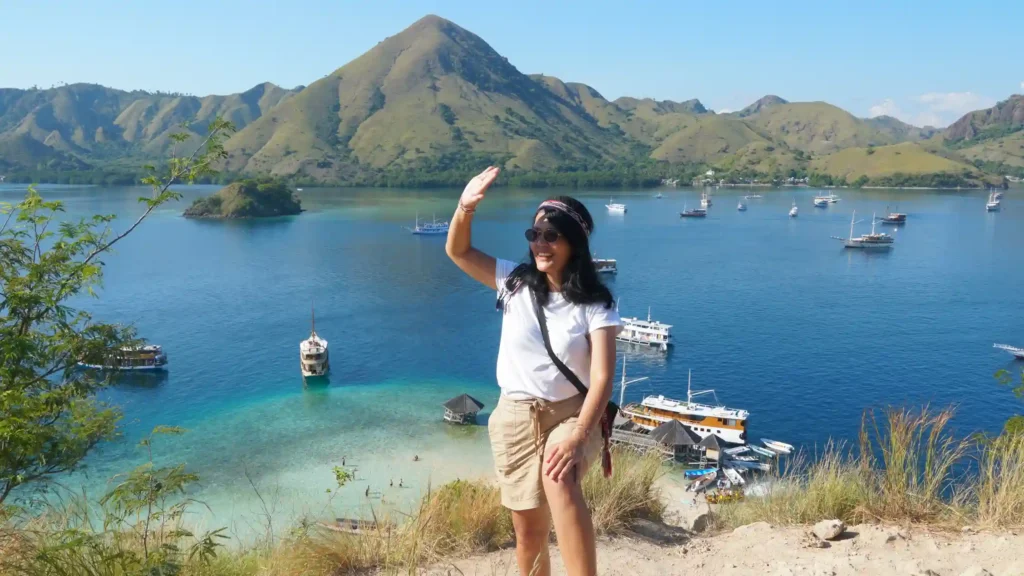
But there were also long pauses.
People standing quietly.
People sitting on rocks.
People staring at the horizon without speaking.
At one point I noticed a couple who hadn’t taken a single photo for several minutes.
That stood out.
Nowadays that’s almost unusual.
The atmosphere felt calmer than I expected.
Less rushed.
Perhaps because everyone had just climbed the same hill.
Shared effort creates a strange kind of connection, even among strangers.
The Descent Was Easier, But Not Necessarily Better
Going down removed the physical challenge.
It also removed part of the anticipation.
I found myself moving slower than necessary.
Not because the trail required it.
Because I wasn’t in a hurry.
There are places where the destination matters more than the journey.
Kelor Island didn’t feel like one of them.
The climb, the pauses, the small observations, the occasional breathless moments—they all seemed connected.
Separating them didn’t really make sense.
Which is probably why conversations about Kelor Island trekking difficulty often miss something important.
The trail isn’t the experience.
The trail is part of the experience.
A Conversation I Still Remember
Later during the trip, someone asked whether the hike had been worth it.
Simple question.
Nobody answered immediately.
There was a short pause.
Then someone said, “It’s not really about the hike.”
At the time I thought that sounded vague.
Now I understand what they meant.
The climb creates perspective.
Literally and figuratively.
You arrive from the sea. You walk upward. You see everything differently for a few moments.
Then you leave.
The memory stays longer than logic suggests it should.
Sailing Lombok to Labuan Bajo Changes Your Expectations
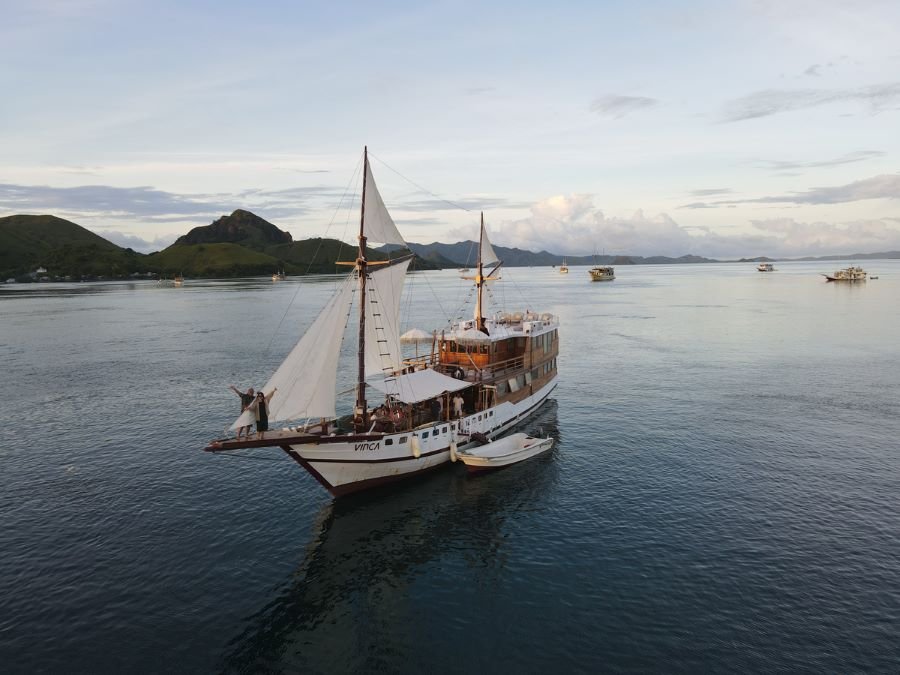
I met several travelers doing a sailing Lombok to Labuan Bajo route.
Most seemed less interested in checking attractions off a list and more interested in collecting moments.
That sounds cliché, but it felt true.
After several days at sea, people stop measuring experiences by size.
A small island can become memorable.
A short hike can become a highlight.
A sunset can dominate an entire evening’s conversation.
Within that context, Kelor Island trekking difficulty almost becomes secondary.
People stop asking whether it’s hard.
They start talking about how it felt.
Those are different questions.
Its Place in Lombok Tourism and Komodo Travel
The growth of Lombok tourism has brought more travelers into this part of Indonesia, and many eventually continue toward Komodo.
That route makes sense.
The landscapes complement each other.
The pace feels similar.
And destinations like Kelor Island fit naturally into the journey.
Not because they’re the biggest attractions.
Sometimes because they’re not.
There’s something refreshing about places that don’t require a full day, extensive planning, or special preparation.
You arrive.
You climb.
You look around.
You leave with a memory that turns out to be larger than the place itself.
So, How Difficult Is It Really?
I wish there were a perfect answer.
There isn’t.
Kelor Island trekking difficulty will feel easy to some travelers and moderately challenging to others. Weather matters. Fitness matters. Pace matters. Expectations matter more than most people realize.
The hill is short.
The slope is real.
The view is excellent.
And perhaps that’s why people continue debating Kelor Island trekking difficulty long after they’ve returned home.
They’re not really arguing about the trail.
They’re trying to describe an experience.
And experiences rarely fit neatly into categories.
That’s probably why the hill looked different in every review I read before visiting.
And, strangely enough, why all of those reviews turned out to be true.