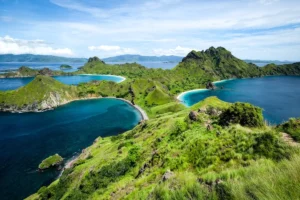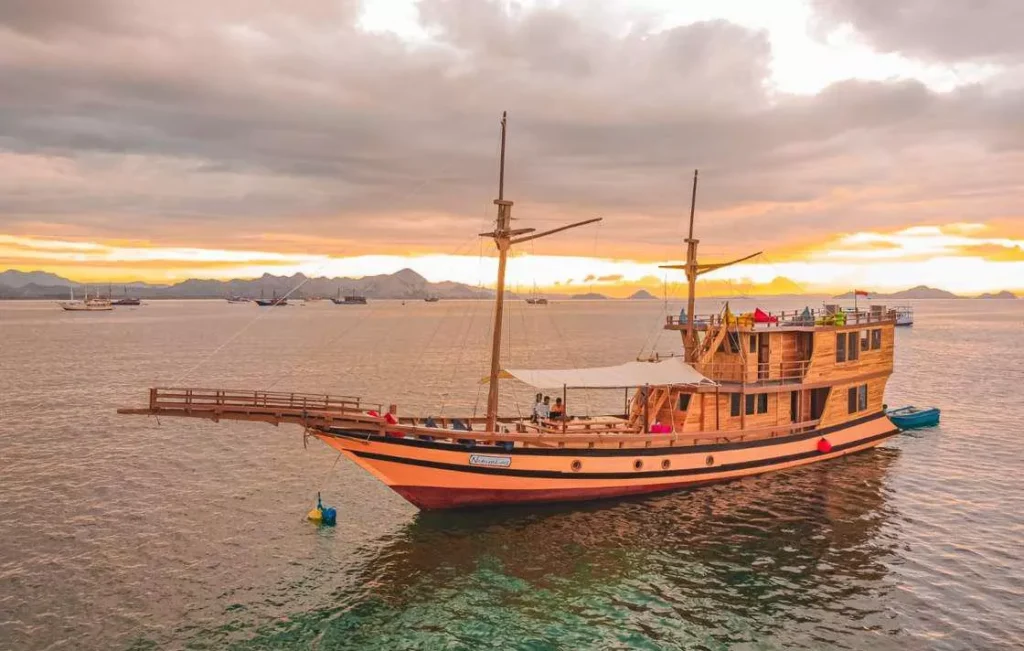
Komodo Island overnight tour feels different the moment you hear it spoken out loud at the dock in Labuan Bajo, like a plan that is both simple and slightly uncertain at the same time, as if the sea itself hasn’t fully agreed yet.
People arrive early, sometimes too early. You can see it in the way they stand—leaning on railings, checking bags that were already checked twice. Labuan Bajo doesn’t rush anyone, it just watches. Small cafés open slowly, engines cough awake near the harbor, and somewhere someone is bargaining for last-minute sunscreen.
This is where the first version of Komodo Island overnight tour begins to form in your mind, not as an itinerary, but as a feeling you can’t fully name yet. You might be joining an open trip Labuan Bajo group, sharing deck space with strangers who will soon know your silence better than your name. There is something slightly awkward about it at first. Then it fades.
And then you leave.
The shoreline doesn’t disappear dramatically. It just… loosens. Like a thought you stop holding.
The Slow Pull Away From Labuan Bajo
Once the boat moves, everything becomes less structured. Conversations start, stop, restart. Someone laughs too early in the morning. Someone else is already quiet, watching the horizon like it owes them something.
On this stretch, Komodo Island overnight tour starts to feel less like a product and more like movement. Not fast movement—never that—but a steady drift through space that refuses to be rushed.
You might hear phrases like sailing Komodo mentioned casually by guides, almost like weather updates. But the reality is less polished. Salt sticks to your lips. Wind changes direction without permission.
And you notice something small: nobody really knows what time it is anymore.
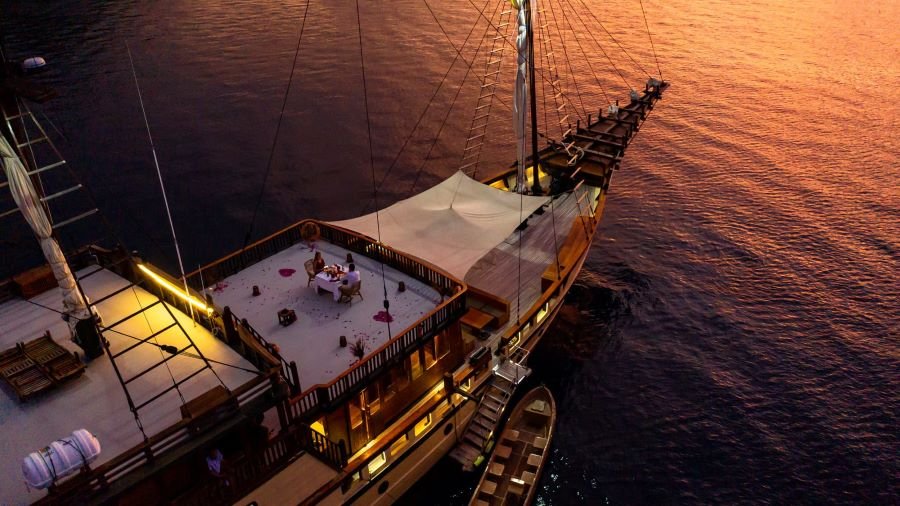
Water, Distance, and the Idea of Sailing Komodo
Out here, sailing Komodo is not a postcard phrase. It’s repetitive. Engine hum, wave impact, pause. Repeat. Then a longer pause you don’t expect.
Someone points at a distant island. It looks closer than it is. Another island appears behind it, faint, almost unsure of itself.
During Komodo Island overnight tour moments like this, time stretches strangely. You might sit on the edge of the deck longer than planned, not because there is something to see, but because leaving feels unnecessary.
There is a quiet confusion here that nobody really comments on. Just small gestures—adjusting hats, shifting seats, drinking water too slowly.
Night One and the Unfinished Sky
When night arrives on the boat, it doesn’t announce itself. It just replaces color with shadow.
On a Komodo Island overnight tour, the first night often feels less like adventure and more like adaptation. The boat becomes smaller internally, even if it stays the same size physically. People speak in softer tones. Or not at all.
You might lie back and listen to the sea tapping the hull, almost like it is counting something you can’t access.
Somewhere between waking and sleeping, thoughts don’t fully finish. They just dissolve.
And sailing Komodo at night feels different too—less like travel, more like being carried.
The Approach Toward Komodo National Park Waters
Morning doesn’t arrive gently here. It just appears, bright and slightly harsh, like it has no interest in your comfort.
This is where Komodo Island overnight tour brings you closer to Komodo National Park, and the water changes character. It becomes layered—blue on blue, depth on depth.
You notice small things more clearly. The way the wind cuts across the surface. The way the boat seems smaller than it did yesterday.
Someone mentions again that this is sailing Komodo territory, as if naming it helps make it real. Maybe it does. Maybe it doesn’t.
There’s a moment—brief, unimportant on paper—where everyone just looks outward without speaking. No one explains why.

Islands That Don’t Try to Impress You
Island hopping during Komodo Island overnight tour is never perfectly linear. Stops feel slightly misaligned with expectation. You think you’re close, but you’re not. Then suddenly you are.
This uneven rhythm becomes normal.
An open trip Labuan Bajo group usually adjusts quickly to this unpredictability. People start sharing snacks. Someone always loses track of their hat. Another person keeps taking photos and then forgetting to look at them.
Sailing Komodo between stops feels like moving through incomplete thoughts. Nothing fully resolves, but nothing feels unfinished either.
It’s an odd balance. Slightly uncomfortable. Slightly calming.
The Meeting With Something Ancient
At some point, you step onto land and feel heat press upward from the ground. This is often where Komodo Island overnight tour shifts tone again.
The presence of Komodo dragons is not dramatic in the way people expect. It is quieter. Heavier. More observational than performative.
Rangers guide you through paths that feel both controlled and natural at the same time. You walk slower without being told to.
And for a moment, everything else feels secondary. Not unimportant. Just… smaller.
Then you return to the boat, and the sea feels different again. As if it remembers you now.
The Second Night That Feels Less New, More Real
The second night on a Komodo Island overnight tour carries a different kind of silence.
Not unfamiliar anymore. Just deeper.
People are more settled now. Conversations are shorter. Some have already stopped trying to define the experience. Others are still trying, but less urgently.
Sailing Komodo at night again feels less like discovery and more like continuation. The boat rocks gently, almost like it is breathing.
You might notice how the stars don’t seem arranged for storytelling. They just exist, uneven and indifferent.
And there’s a strange comfort in that.

Small Moments That Refuse to Be Organized
Somewhere between islands, someone mentions how the Komodo Island overnight tour feels shorter than expected. Someone else disagrees immediately, but without energy.
These contradictions happen often.
Food tastes different at sea. Sleep feels thinner. Even silence feels layered.
There’s no single emotional thread that holds everything together. Just fragments. Repeated observations. Slightly unfinished thoughts.
And sailing Komodo becomes less about movement and more about noticing what doesn’t change even when everything else does.
The Return That Doesn’t Feel Like Ending
When the boat turns back toward Labuan Bajo, it doesn’t feel like closure. It feels like direction changing without announcement.
Komodo Island overnight tour doesn’t end dramatically. It reduces slowly.
Land appears again. Familiar shapes return. Noise increases in small increments.
An open trip Labuan Bajo group becomes quieter in a different way now—not from uncertainty, but from transition. People check phones again. Time comes back in pieces.
And yet something still feels slightly suspended.
What Lingers Without Trying To
After everything, Komodo Island overnight tour doesn’t stay as a single memory. It splits into smaller impressions: wind on skin, engine rhythm, distant islands that looked closer than they were.
Sailing Komodo leaves traces that don’t organize themselves neatly. They show up later, unexpectedly, during ordinary days when nothing is happening.
And maybe that’s what makes it difficult to fully describe.
Because even after leaving, something still feels like it is moving.
Not fast. Not loud.
Just continuing.