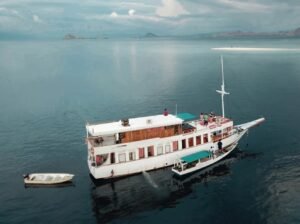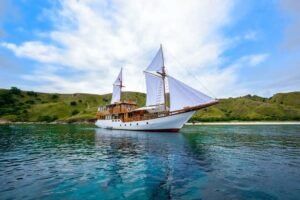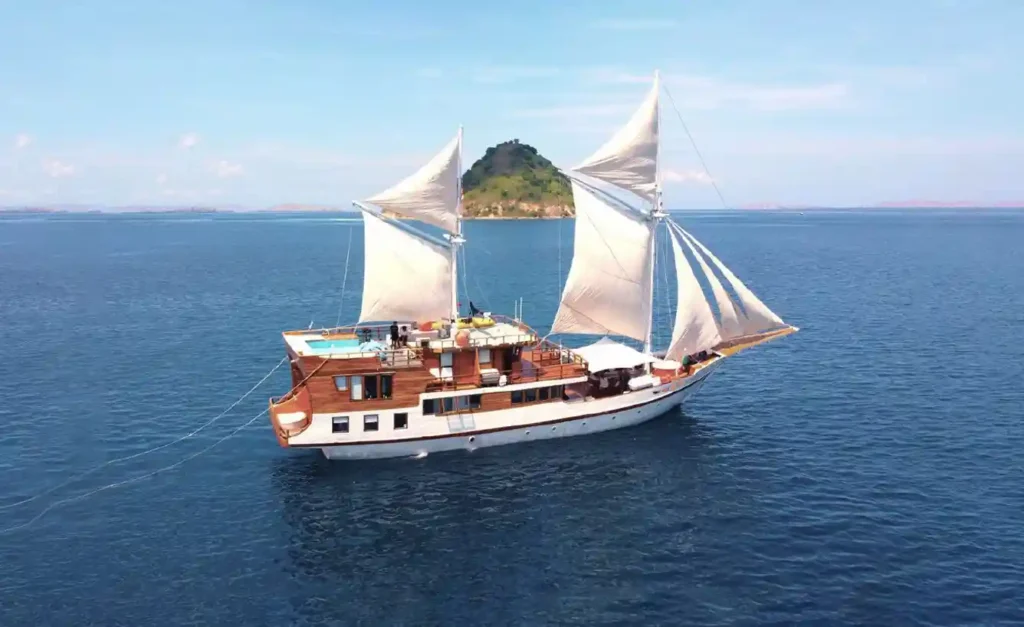
The first evening I tried sailing Komodo to Lombok, I honestly didn’t know what to expect. Some people on the boat were excited, talking about snorkeling spots and sunset viewpoints. Others were just sitting quietly on the deck. The engine hummed softly while the boat moved away from the harbor. That was the beginning of sailing Komodo to Lombok, though it didn’t feel dramatic at all. No big moment. No announcement. Just water slowly widening around us. I had heard travelers describe sailing Komodo to Lombok as one of the best ocean routes in Indonesia, but at that moment it felt strangely simple. The wind. The wooden deck. And the slow rhythm of the boat starting its path across the Flores Sea.
Maybe that’s the first surprise.
Nothing feels rushed.
People expect adventure to start with excitement, but the beginning of sailing Komodo journeys is usually quiet. Someone pours tea. Someone checks their camera again. A backpack slides slightly as the boat changes direction.
Small things.
You notice them more because there isn’t much noise around.
Leaving the Komodo Islands Behind
Most travelers begin near the Komodo region. The harbor is usually busy in the morning, with boats preparing for different routes. Some are heading toward dive sites. Others are starting longer sailing Komodo trips, including multi-day adventures like sailing Komodo to Lombok.
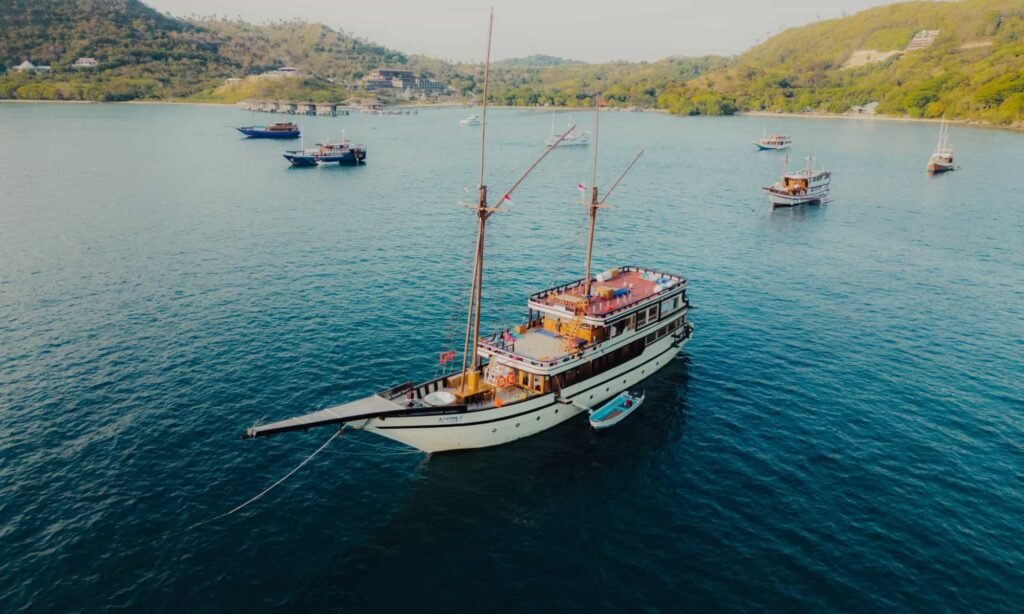
Our boat moved slowly between the smaller islands before reaching open water.
For a while the coastline stayed visible. Dry hills, pale beaches, scattered cliffs. The scenery feels almost prehistoric, like the land hasn’t changed much for centuries.
Then eventually the islands fade behind the boat.
That moment is subtle, but it matters.
Because after that, the journey becomes about the sea. Many travelers who choose sailing Komodo to Lombok describe this transition as the point when the trip truly begins. The busy harbor and rugged islands slowly disappear, replaced by wide horizons and long stretches of ocean that make the experience feel both quiet and adventurous.
The Rhythm of a 4D3N Boat Expedition
People often describe the trip as a 4D3N boat expedition, but time doesn’t really behave like normal schedules once you’re out there.
Day one feels active.
Travelers talk a lot. Everyone is curious about the route, the islands, the snorkeling spots. Cameras click constantly. Someone asks the guide about manta rays.
But by the second day the atmosphere shifts a little.
You wake up earlier without setting an alarm.
Maybe it’s the sunlight. Maybe the sound of water moving along the hull.
Breakfast appears on the deck—fruit, eggs, coffee that tastes surprisingly good when you’re surrounded by ocean.
And the boat keeps moving.
Slowly.
Life Aboard a Liveaboard Komodo Boat
A liveaboard Komodo trip isn’t about luxury in the traditional sense.
Cabins are simple. Space is limited. Sometimes the shower water runs out faster than expected.
Still, people seem comfortable.
Actually, more than comfortable.
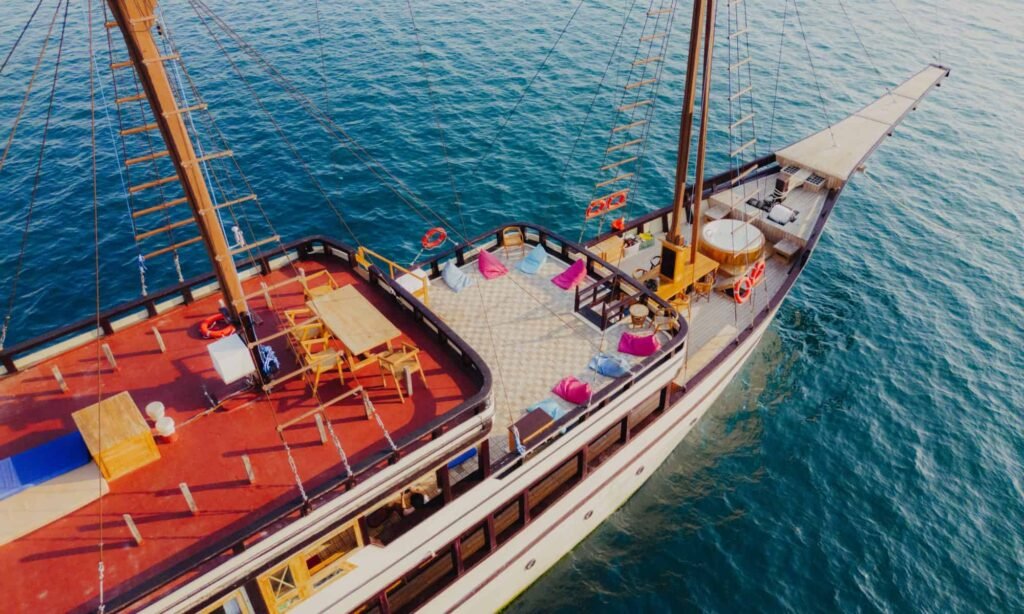
During the evenings the deck becomes the main gathering spot. Travelers sit on beanbags or thin mattresses while the sky darkens above the sea. Conversations drift between topics—travel stories, jobs back home, random memories.
Someone once told me the ocean makes strangers talk more openly.
Maybe that’s true.
Or maybe when phones stop working, people remember how to talk again.
Moments like this are surprisingly common during sailing Komodo to Lombok trips. After a long day of moving between islands and open water, the quiet evening atmosphere naturally brings people together, turning a simple boat deck into a place where travelers share stories and laughter under a sky full of stars.
Islands That Appear Without Warning
One interesting thing during sailing Komodo routes is how the islands appear.
You can stare at the horizon for a long time. Nothing there. Just blue water.
Then suddenly a dark shape appears.
At first it looks like a cloud.
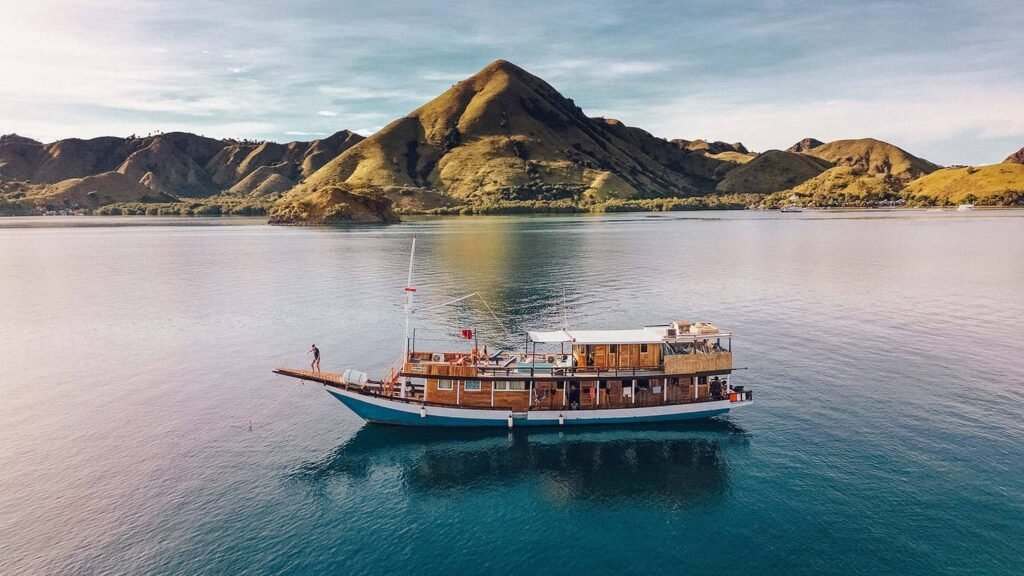
But slowly it becomes an island—steep, dry, sometimes covered in golden grass.
The captain adjusts the course.
The boat glides closer.
Sometimes the anchor drops in a small bay where the water is unbelievably clear. You can see coral formations from the surface before even putting on a snorkel mask.
Jumping into the water always feels cold for the first second.
Then perfect.
The Quiet Hours of Open Sea
Between the famous stops, there are long sections of open water. These stretches rarely appear in travel photos, but they shape the experience more than people expect.
During sailing Komodo journeys, the boat might spend hours crossing open sea.
At first that sounds boring.
It isn’t.
People read books. Some nap in the shade. Others just watch the horizon.
Once, during a calm afternoon, the entire boat went quiet for almost twenty minutes. Nobody planned it. Conversations just faded away.
The only sound was the wind.
And the waves hitting the hull.
Unexpected Moments
Travel memories rarely come from the things listed on itineraries.
Sometimes it’s something small.
A flying fish skipping across the surface.
The smell of grilled fish drifting from the kitchen during sunset.
Or a dolphin that appears beside the boat and swims quietly for several minutes without doing anything dramatic.
On one trip, everyone stood along the railing watching a single dolphin move through the water. No jumps. No tricks.
Just swimming.
Oddly enough, that became the story people told the most later.
Why Sailing Komodo Feels Different
There are many island trips in Southeast Asia, but sailing Komodo has a slightly different feeling.
Part of it comes from the distance between islands. The crossings are real journeys, not just short boat rides.
Another part is the pace.
Because the boat moves slowly, travelers begin noticing things they might normally ignore—the direction of the wind, the changing colors of the sea, the way islands look different in morning light compared to sunset.
These details sound small.
But together they shape the whole trip.
The Final Approach to Lombok
Toward the final day, the water color changes slightly as the boat approaches Lombok.
You start seeing more fishing boats.
The coastline grows clearer.
People begin packing bags again, which feels a little strange after several days of relaxed routine.
Some travelers sit quietly on the deck during those last hours. Others take photos of the approaching land.
The mood isn’t sad exactly.
Just thoughtful.
Maybe because everyone knows the rhythm of the sea is about to end.
Why Sailing Komodo to Lombok Stays in Memory
Long after the journey ends, travelers often remember sailing Komodo to Lombok in unexpected ways.
Not just the snorkeling spots or famous viewpoints.
Instead, it’s the atmosphere.
The slow mornings on deck.
The quiet nights on a liveaboard Komodo boat while the ocean moves beneath you.
And the simple realization that traveling across the sea can feel very different from rushing between destinations.
That’s probably why sailing Komodo to Lombok stays in people’s travel stories long after the trip is finished.
Not because it’s dramatic.
But because it feels real.