I’m not sure when exactly Wae Rebo got under my skin.
Maybe it was during the walk.
Or maybe later, at night, when the wind kept hitting the roof and no one felt the need to speak.
Either way, this wasn’t a place I consumed like other destinations. Wisata Wae Rebo Manggarai didn’t feel like tourism. It felt like borrowing someone else’s life for a moment. Not owning it. Just touching it briefly.
That sounds dramatic. But stay with me. Some places do that to you when you’re not trying too hard to be impressed.
The Walk That Quietly Changes Your Head
The thing is, Wae Rebo is not easy. And I don’t mean “Instagram hard”. I mean genuinely inconvenient. You walk. You sweat. You question your decision. And at some point, your phone becomes useless.
Which is probably the point.
The trail starts from Denge Village. Forest, dirt, roots, stones. Nothing cinematic at first. Just walking. Step after step. Sometimes the silence feels heavy, sometimes comforting. I remember thinking: If this village is overrated, I’ll be annoyed.
Funny how that thought disappeared later, somewhere between the sound of insects and my own breathing.
When the Village Appears Without Warning
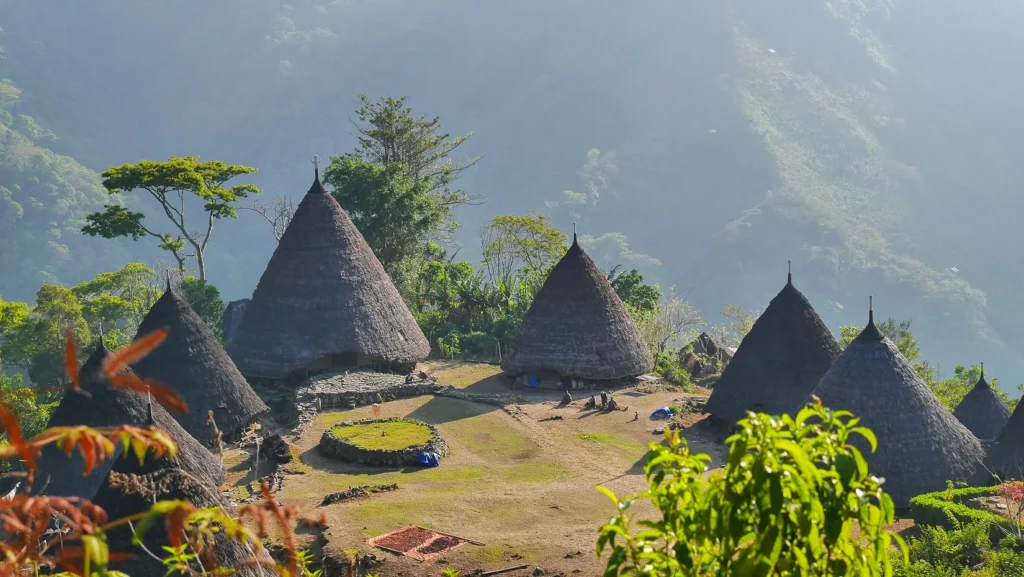
When the village finally appeared, it didn’t announce itself. No grand reveal. Just shapes in the fog. Roofs that looked too tall. Too quiet.
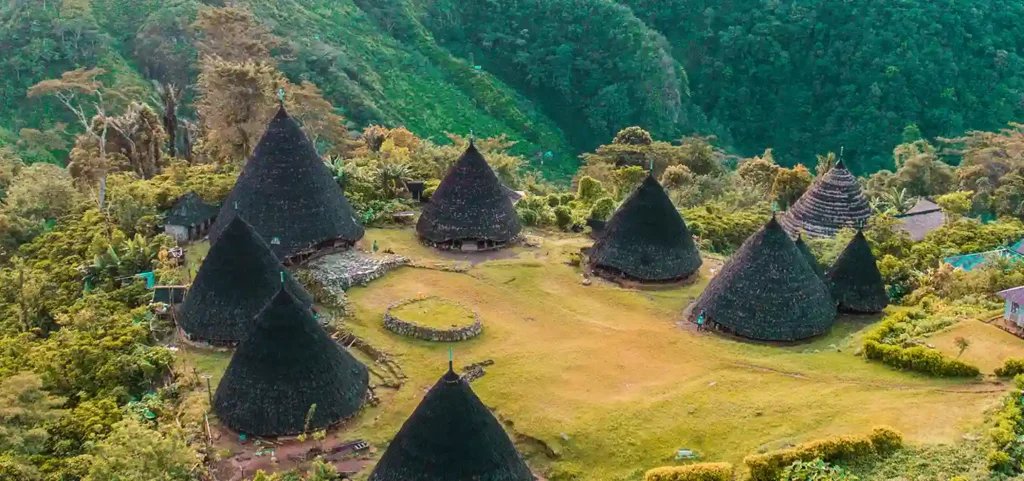
This is the Wae Rebo traditional village.
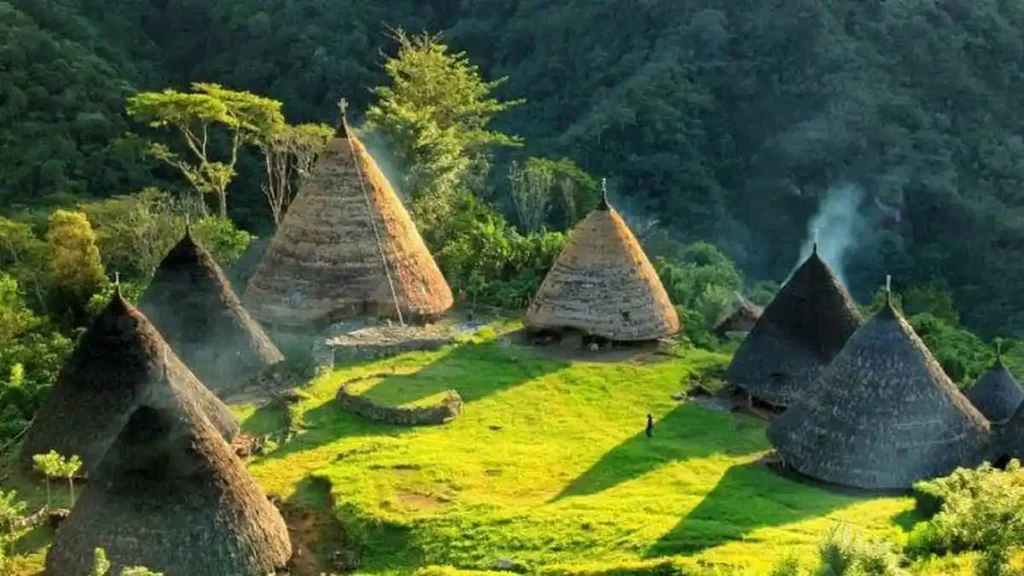
Seven houses. All similar. All facing each other. No one trying to stand out. That alone felt strange, in a good way. In a world obsessed with individuality, this quiet uniformity feels almost rebellious.
Living Inside the Mbaru Niang
The houses—Mbaru Niang—are impossible to understand from photos alone. Inside, it’s dark. Warm. Smells like smoke and wood and time.
Families live together here. Not “together” like sharing a building. Together like sharing space, routines, silence. Even boredom is shared, and that somehow makes it lighter.
In wisata Wae Rebo Manggarai, privacy works differently. And somehow, it doesn’t feel uncomfortable. It feels… intentional.
Being Welcomed Without Being Entertained
I was welcomed with a simple ritual. Nothing theatrical. No instructions shouted in English. Mostly listening. Waiting. Nodding when others nodded.
It reminded me that I was a guest, not an audience. That distinction changes everything.
People talk about Wae Rebo as cultural heritage, and yes, officially it is. UNESCO and all that. But those words feel flat compared to reality. Culture here isn’t preserved behind glass. It’s worn. Used. Sometimes messy. Sometimes tired.
That’s why wisata Wae Rebo Manggarai feels real, not polished.
Daily Life That Refuses to Rush
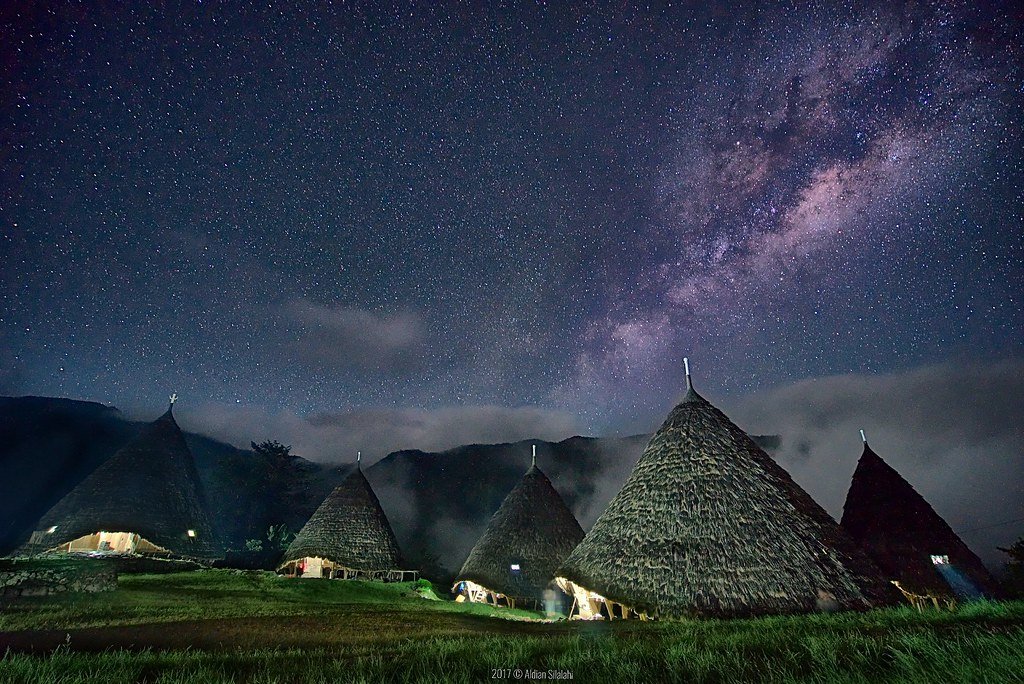
At night, the temperature drops fast. You feel it in your bones. People sit close to the fire. Coffee appears. Strong. Bitter. No one asks how you like it.
You drink it anyway.
There’s not much to “do” here in the usual sense. No activities schedule. No checklist. You talk if you want. You sit if you don’t. I caught myself staring at nothing for long stretches of time.
That almost never happens to me. And I didn’t realize how much I needed it.
Morning Comes, Quietly Again
Morning comes early. Smoke again. Light slipping through gaps in the roof. The village feels different in daylight—less mysterious, more human.
Still quiet though. Roosters, footsteps, soft conversations.
Walking back down felt… heavier. Same trail, same forest, but my head was full. That’s when it hit me that wisata Wae Rebo Manggarai isn’t about staying long.
It’s about how it rearranges things inside you, quietly, without asking permission.
From the Mountains to Sailing Labuan Bajo
Later, like many others, I went on to Sailing Labuan Bajo. Boats, islands, bright water, Komodo dragons. It was beautiful. Loud in its own way.
Instagram loved it.
But my mind kept drifting back to the mountains. Sailing Labuan Bajo shows you how big the world is. Wae Rebo shows you how little you actually need to feel grounded. Together, they balance each other in a way that feels accidental but perfect.
Tourism, Responsibility, and a Fragile Balance
Tourism helps Wae Rebo survive. That’s true. But it also demands responsibility.
Dress properly. Ask before photos. Don’t treat the village like a backdrop. Don’t rush conversations just because you have a schedule.
When you visit wisata Wae Rebo Manggarai, you’re stepping into a fragile agreement between past and present. Break it, and something valuable disappears quietly, without drama.
Why Wae Rebo Doesn’t Leave You Easily
I’ve been to places that impressed me. I’ve been to places that entertained me. Wae Rebo did neither.
It stayed.
Weeks later, I still remember the sound of wind hitting the roof. The way people didn’t rush conversations. The feeling that nothing needed improvement.
That’s rare.
That’s why wisata Wae Rebo Manggarai isn’t loud on social media. It doesn’t beg to be shared.
It waits.