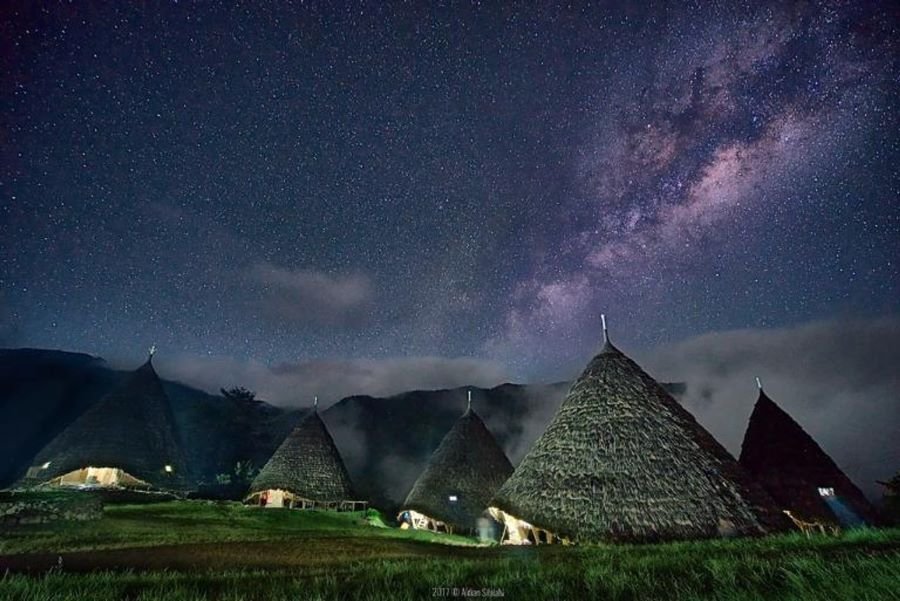
You don’t plan a Wae Rebo night the same way you plan a beach trip. It doesn’t begin with excitement. Not really. It starts with a question… maybe even a bit of doubt. Why go that far, just to spend a night in a remote village?
And yet, something pulls you.
A Wae Rebo night isn’t loud about what it offers. No big promises. No dramatic highlights. Still, people return from it slightly changed. Not in a life-altering way—more like… something inside them has been quietly rearranged.
If you’ve done Sailing Labuan Bajo or joined an open trip Labuan Bajo, you probably know the feeling of chasing views. Wae Rebo is different. A Wae Rebo night doesn’t chase your attention. It waits.
The Walk Up Feels Longer Than It Looks
The trek is often described as “moderate.” That word doesn’t really help.
You walk through dense forest, sometimes in silence, sometimes with random conversation that fades in and out. The air feels heavier as you climb, or maybe that’s just your breathing getting louder. Hard to tell.
There’s a moment—usually when your legs start to complain—where you think, “This better be worth it.”
No answer comes.
But you keep going anyway.
And when Wae Rebo finally appears, it doesn’t feel like a grand reveal. It’s quieter than that. Almost like you’ve interrupted something private.
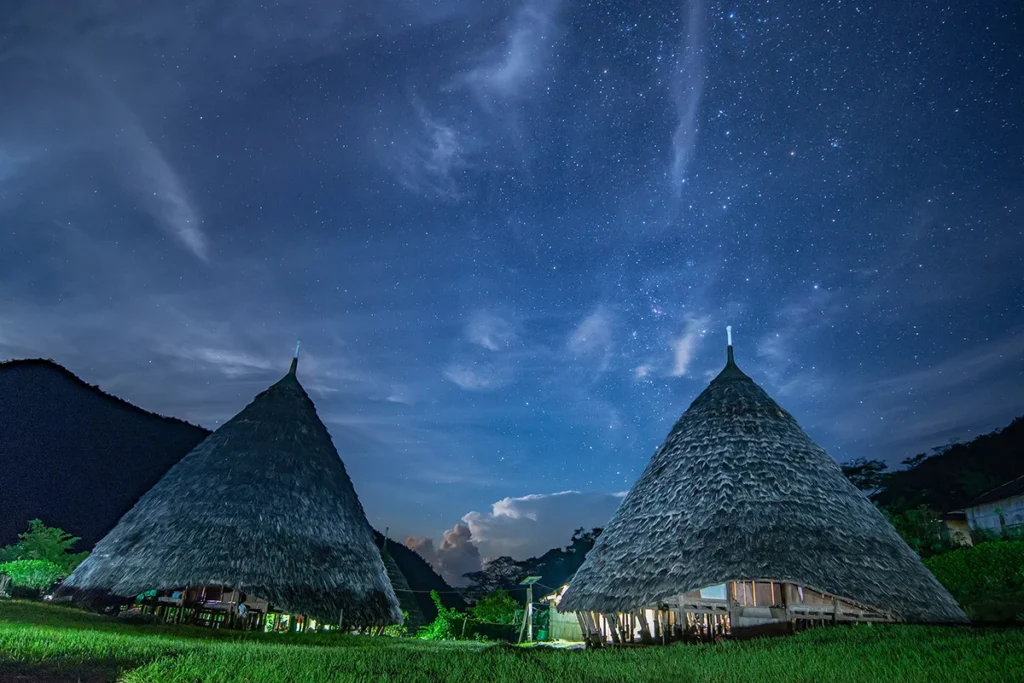
Wae Rebo Night Feels Different When Darkness Settles
First impressions don’t fully land.
You arrive, you look around, you take it in.
Seven traditional houses. Open space. Hills wrapped in soft mist. It’s beautiful, sure. But the feeling isn’t immediate. Not overwhelming. Not the kind that hits you instantly.
It builds slowly.
During a Wae Rebo night, that first impression changes. What seemed simple starts to feel layered. What looked quiet begins to feel alive in a different way.
You don’t notice the shift right away.
That’s the thing.
Evening Comes Without Announcement
No dramatic sunset moment. No clear signal.
The light just fades.
People gather inside the Mbaru Niang houses. The fire is lit, not as a performance, but because it’s needed. Warmth matters here. You sit where there’s space. There’s no assigned spot.
A Wae Rebo night begins like that—without ceremony.
Someone hands you a drink. Coffee, usually. It’s warm, slightly bitter, grounding. Conversations start, stop, then start again. No one rushes to fill the gaps.
At some point, you realize how different that feels.
You Start Noticing Small, Almost Pointless Things
The sound of wood shifting in the fire.
The way smoke drifts upward, then disappears into the dark ceiling.
A brief laugh from across the room that fades quickly.
None of these things are important. And yet, during a Wae Rebo night, they feel… significant. Like they’re part of something bigger, even if you can’t explain what that is.
You sit there longer than you expect.
Not because you have to.
Because leaving feels unnecessary.
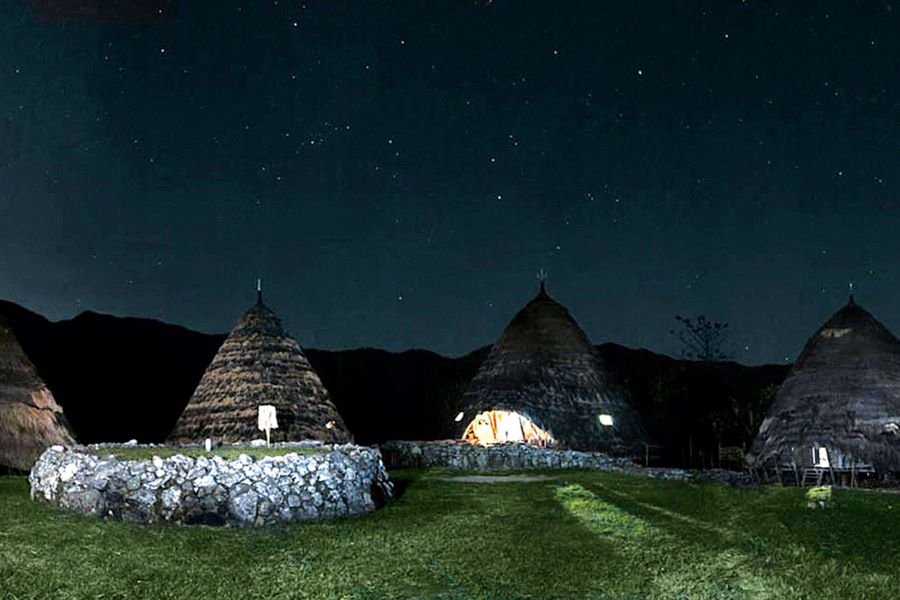
Conversations Don’t Follow a Straight Line
Someone talks about their trip—Sailing Labuan Bajo, the islands, the usual highlights.
Then, without a clear transition, the topic shifts.
Life choices. Work. Things left unfinished. Thoughts that don’t usually come up in casual settings.
It’s not deep in a forced way. No one is trying to sound insightful. It just happens.
A question lingers longer than expected. An answer comes slower.
And sometimes… no answer comes at all.
Strangely, that’s okay.
The Cold Feels Sharper Outside
Stepping out at night is a small decision.
You hesitate for a second, then go anyway.
The cold hits immediately. Cleaner than expected. The kind that wakes you up without warning. The village looks different from outside—quieter, more distant, almost like it’s holding its breath.
Clouds move slowly below. Or maybe beside you. It’s hard to tell.
This is the “village above the clouds” people talk about. But standing there, it doesn’t feel like a slogan. It feels… literal.
You stay for a minute.
Maybe two.
Then you go back inside, carrying that silence with you.
Sleep Comes, But Not Instantly
You lie down on a simple mat. No luxury. No distractions.
At home, this might feel uncomfortable.
Here, it doesn’t.
Your body is tired from the trek. Your mind, though… still processing. Thoughts come and go, slower than usual. There’s no urgency to them.
A Wae Rebo night doesn’t rush you into sleep.
It lets you arrive there.
Eventually.
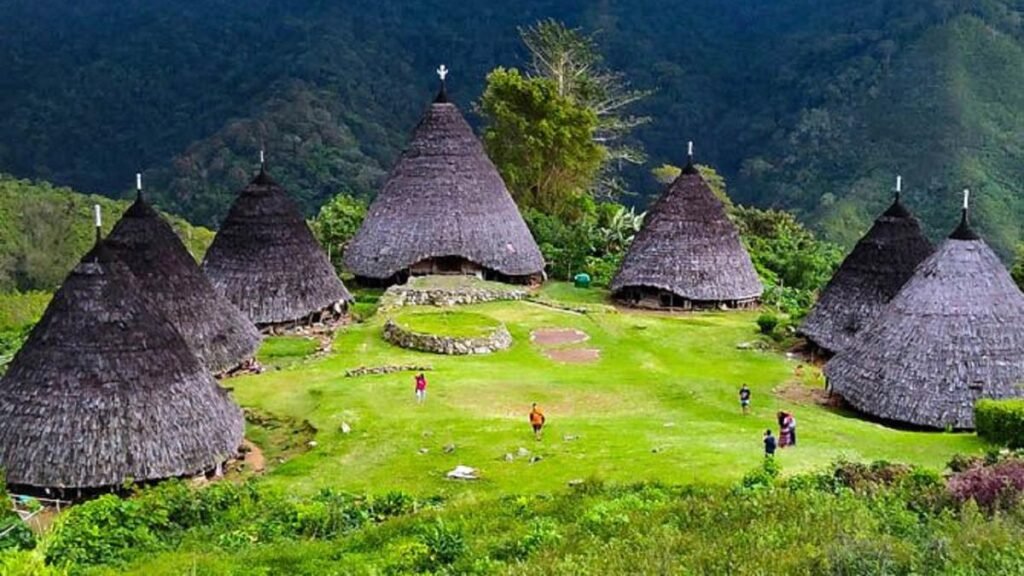
Morning Feels Like a Continuation, Not an Ending
You wake up early, but not abruptly.
The light returns gradually, just like it left. The village looks clearer now. The mist shifts, revealing more of the landscape, then hiding it again.
People move quietly. No one breaks the atmosphere.
You step outside and notice something—nothing has really changed, but everything feels slightly different.
Maybe it’s you.
Leaving Feels… Incomplete
Packing up is simple.
The trek down waits.
But there’s a small hesitation before you leave. Not strong enough to stop you, just enough to notice.
A Wae Rebo night doesn’t give you a clear conclusion. No final moment that wraps everything up neatly.
It just… ends.
And yet, it doesn’t.
The Feeling Follows You Back
On the way down, conversations are lighter. Or quieter. It depends.
By the time you return to Labuan Bajo, the usual rhythm starts creeping back in. Plans, schedules, maybe another open trip Labuan Bajo.
But something stays.
Not constantly. It comes and goes.
A memory of stillness. Of space. Of not needing to fill every moment with something.
A Wae Rebo night doesn’t demand to be remembered.
It just shows up again, unexpectedly.