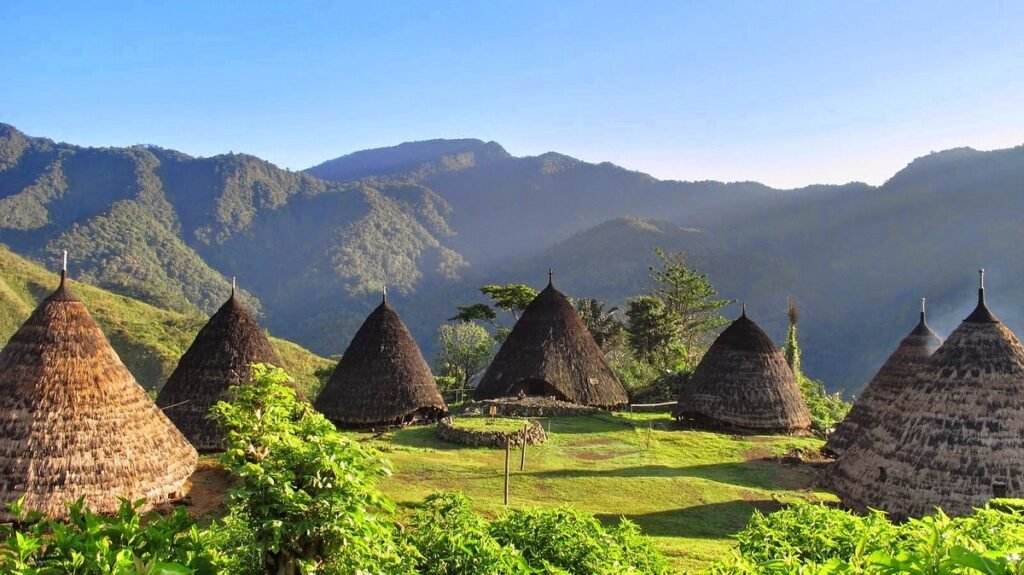
I still remember the thick, damp fog hanging over the valley when I first saw those strange cone houses. You’re basically standing on a slippery, muddy ridge in the middle of Flores, gasping for air, wondering why on earth you paid to suffer like this. Then, through the gray clouds, the homes of the Wae Rebo Tribe just sort of appear out of nowhere. It’s wild. Honestly, calling the Wae Rebo Tribe just some tourist spot feels wrong because they are a real community living their lives way up there, completely isolated. For hundreds of years, the people of the Wae Rebo Tribe have guarded their mountain home against the modern world, without roads, cellular service, or internet.
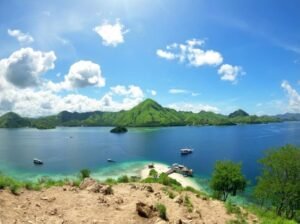
Most people, including me, don’t start their trip thinking about climbing mountains. No, you probably start by the ocean. You spend a couple of days on a boat, doing the whole sailing Labuan Bajo thing, jumping into the crystal-clear water, looking at dry islands, and getting your skin absolutely baked by the sun. But after a few days, your skin is peeling, and you want to see something green. So you get in a car, and you drive into the mountains. It’s a bumpy, nauseating ride, honestly. One day you’re in a swimsuit, and the next, you’re shivering in a misty forest. I mean, one day you are basking in the tropical sun, and the next, you are digging through your bag for a damp sweater. It feels like two different planets, honestly.
Trading the Salty Coast for Muddy Trails
The actual hike starts from a small place called Denge. I remember sitting on a wooden bench there, tying my boots, looking at the steep trail disappearing into the thick trees, and feeling a sudden wave of regret. The locals make it look so easy. They jog past you carrying fifty-pound bags of coffee beans on their shoulders, wearing nothing but worn-out sandals, while you’re gasping for air with your expensive hiking gear.
The path is muddy, slippery, and just relentless. There are three resting points, or pos, along the way. Honestly, at the second one, I literally sat on a wet log for ten minutes, listened to some incredibly loud bugs, and seriously debated turning back. The Wae Rebo Tribe doesn’t have a paved road up to their village, and honestly, that’s probably the only reason their culture hasn’t been completely wiped out by modernization. I mean, if there was a paved road, it would have been turned into a noisy resort years ago, wouldn’t it?
Understanding the Seven Cones of Grass
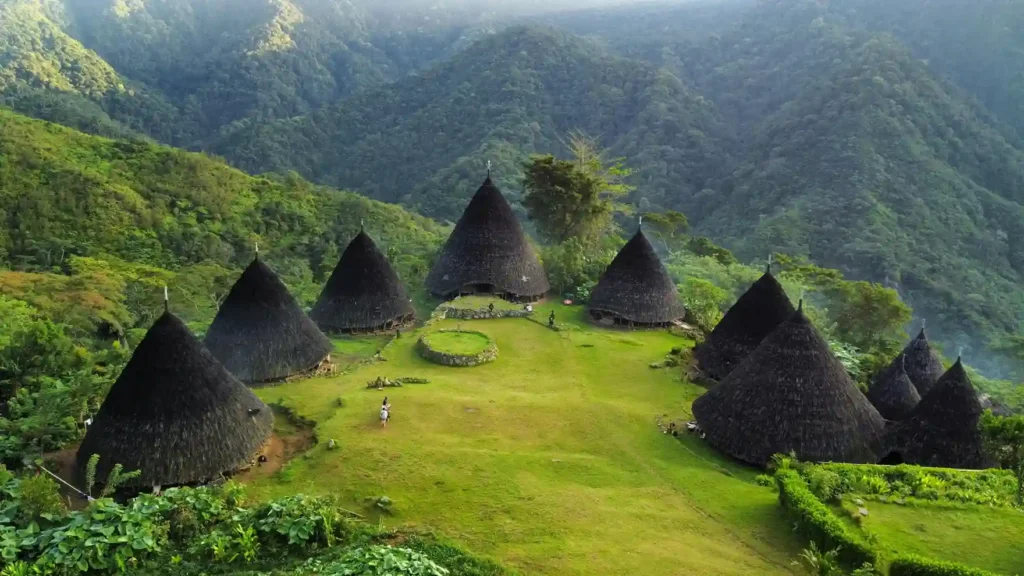
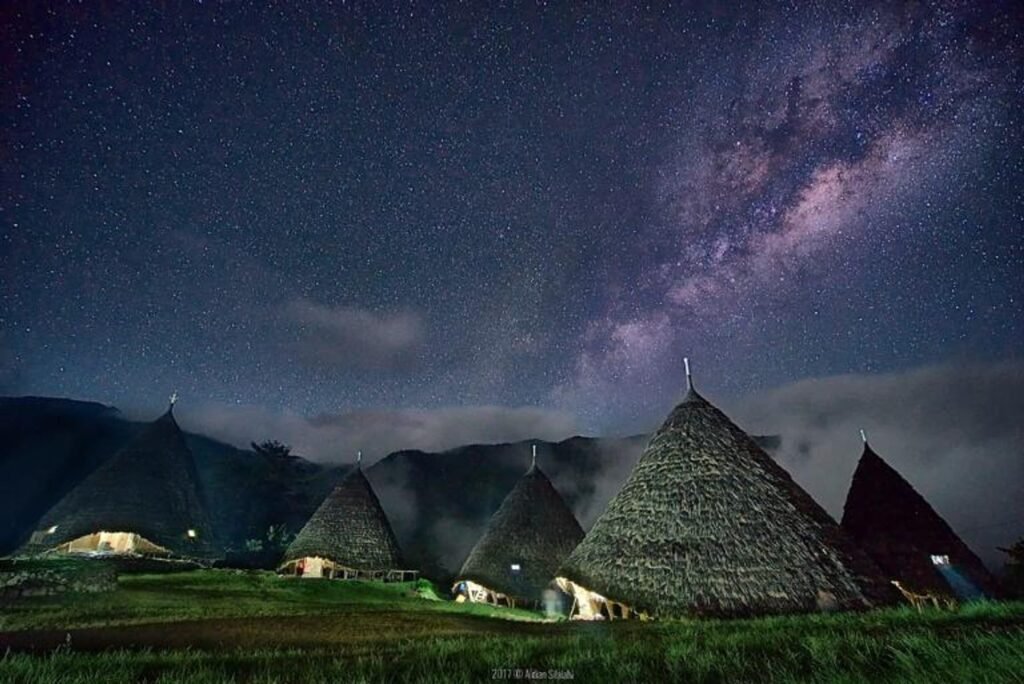
When you finally get to the top, the view hits you. Those seven cone houses—called Mbaru Niang—look like something out of a fantasy movie. They are built entirely out of wood, bamboo, and grass, held together with rattan strings instead of nails.
They have five stories inside, which is crazy to think about. Each floor has a purpose, from storing food to keeping sacred items. I just stood there, watching smoke drift out from the thatched roofs. The Wae Rebo Tribe lives at a completely different pace. They aren’t trying to rush into the future, but they aren’t stuck in some museum either. They just exist in this beautiful, suspended loop of time. It makes you realize how much useless stuff we worry about back home.
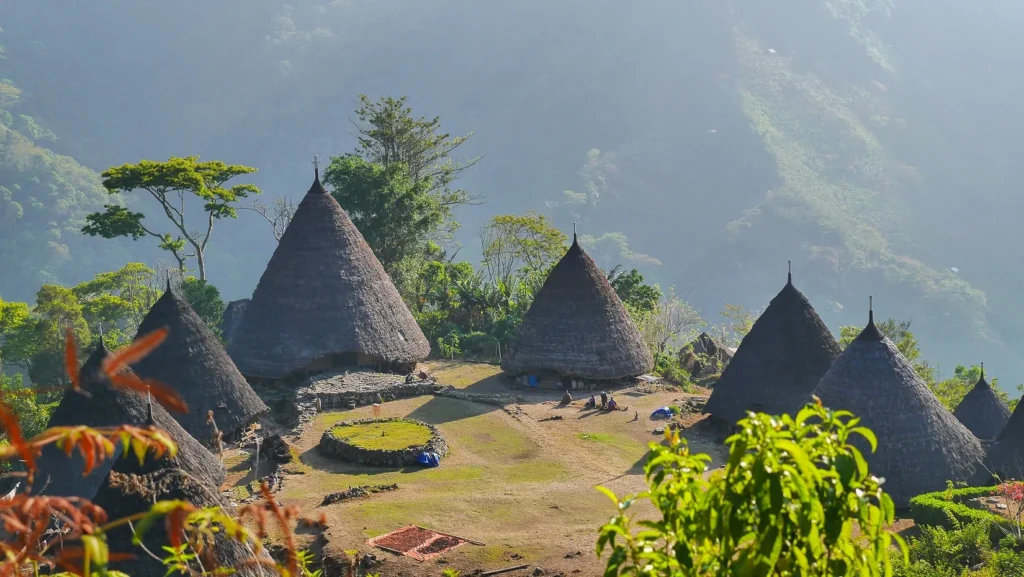
You smell the coffee long before you actually see the houses. It’s this deep, earthy aroma that mixes with the smell of wet dirt. The Wae Rebo Tribe relies heavily on these beans. They dry them on massive tarps right in the middle of the village yard. It’s hard work. Think about it: every single bean you drink up there had to be carried down that crazy trail on someone’s back. That realization makes your morning cup taste completely different.
I sat with one of the local guys, and he told me that whenever they need to rebuild a house, the whole village works together for months. If one roof leaks, everyone helps. That kind of community is something the Wae Rebo Tribe has kept alive, even as some younger kids leave to go to school in the bigger towns. Somehow, the pull of the mountains always seems to bring them back.
Meeting the Spirits in the Main House
Lately, more people are making the trek. You can easily book a Wae Rebo tour online, which takes care of the transport and guides. It makes it simpler, sure, but it also means the village gets crowded.
I was sitting by the central stone altar, watching a group of tourists who arrived on an open trip Labuan Bajo package. They looked exhausted but excited. I did wonder for a second if too many visitors would eventually ruin the quiet vibe. But the Wae Rebo Tribe has this amazing way of keeping their boundaries intact. They are warm, but they make sure you respect their space. Before you can do anything—even take a photo—you have to do this welcome ritual.
The ritual takes place in the main, largest house. The village chief, an old man with eyes that seem to see right through you, speaks in a low, rhythmic Manggarai dialect. He is telling the ancestors that some strangers have arrived. You don’t understand the words, but you feel the weight of them. It’s a bit awkward, honestly. You’re sitting cross-legged on a woven mat, hoping your legs don’t cramp up, listening to words you don’t understand. But it feels real. It reminds you that you are a guest in the home of the Wae Rebo Tribe, not just a customer. They are sharing their mountain with you, but they aren’t changing who they are to please tourists.
Cold Nights and Strong Coffee
Once the sun goes down, it gets freezing. You need a jacket, seriously. There’s a noisy generator that runs for a couple of hours so everyone can eat dinner, and then it shuts off. That’s when the magic happens. The darkness is total, and the sky lights up with millions of stars because there’s no electricity for miles.
You sit outside, teeth chattering a bit, talking to the guides. The Wae Rebo Tribe has this quiet strength that makes you feel very small. If someone gets really sick up here, there’s no ambulance. They have to carry them down that steep trail on a bamboo stretcher. It’s a tough way to live, but they are proud of it.
Walking down the next morning, my legs felt like jelly. But looking back at the village one last time, wrapped in its morning blanket of fog, I felt incredibly grateful. The Wae Rebo Tribe shows us that sometimes, the hardest paths lead to the most beautiful places. It’s not an easy trip, but it’s one of those rare experiences that actually stays with you long after you’ve washed the mountain mud off your shoes.