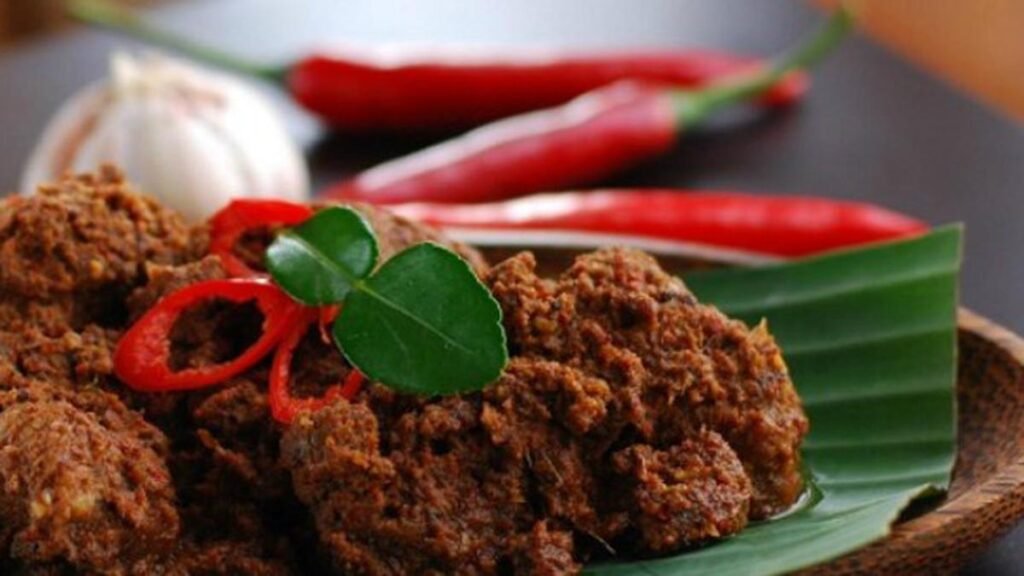
If you’ve ever taken a bite of rendang from Indonesia, kamu pasti tahu sensasi hangat, kaya, dan lembut yang langsung “ngena”. It’s one of those rare dishes that wraps you in comfort while blowing your mind with deep flavors. As someone who’s spent years exploring Indonesian cuisine and its layers of meaning, I can tell you this: there’s a reason rendang is often called world’s most delicious food. And yes, it’s not just hype — there’s a story, a science, and a soul behind it.
Before we dive deeper, coba bayangkan: aroma rempah yang naik pelan-pelan dari panci, suara santan yang mendidih lembut, dan warna cokelat gelap yang makin pekat tiap menit. That moment — I swear — feels almost meditative.
And this journey? It starts with understanding why rendang from Indonesia is more than just traditional food. It’s cultural poetry.
What Makes Rendang from Indonesia So Irresistibly Unique?
Let’s start with the obvious but magical part: the flavor. Seriously, how could one dish pack so much complexity?
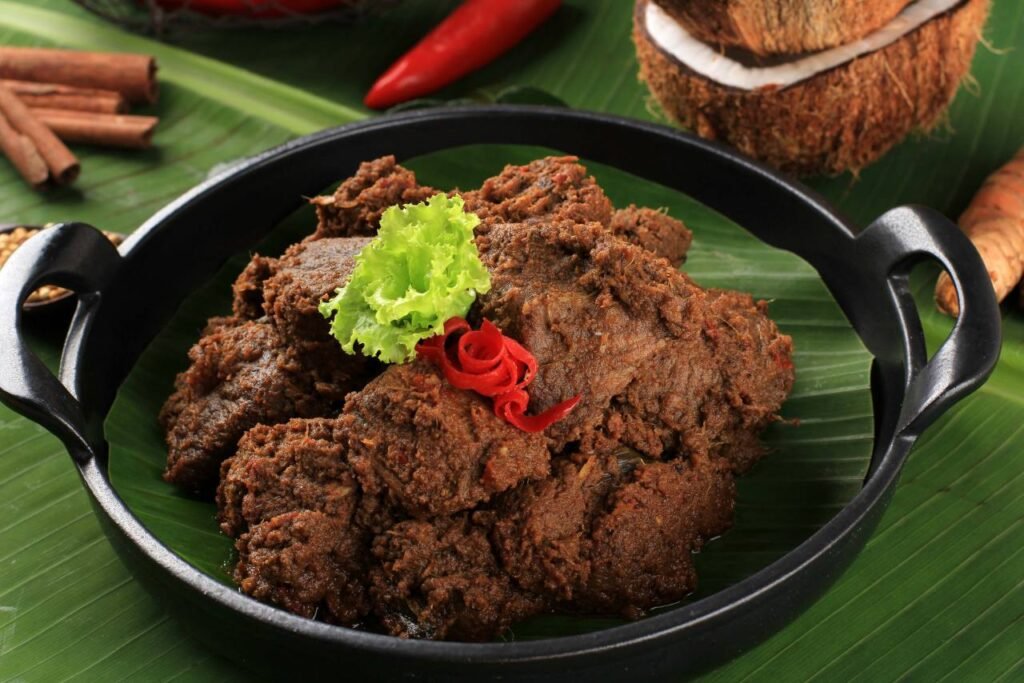
Rendang isn’t simply cooked — it’s transformed. What begins as beef, spices, and coconut milk slowly evolves into a rich, caramelized masterpiece through hours of patient simmering. That slow reduction is what sets rendang from Indonesia apart from other stews.
In Minangkabau culture, where it originated, rendang reflects life philosophy. Each ingredient symbolizes something. The slow cooking represents wisdom: the longer you’re “processed”, the stronger your character. Kind of beautiful, right?
And if you’ve ever talked to a Padang person, they’ll tell you: rendang isn’t just food — it’s pride.
Along the way, the dish absorbs layers of flavor: lemongrass, galangal, chili, garlic, turmeric. Spices you could practically smell if you close your eyes for a second.
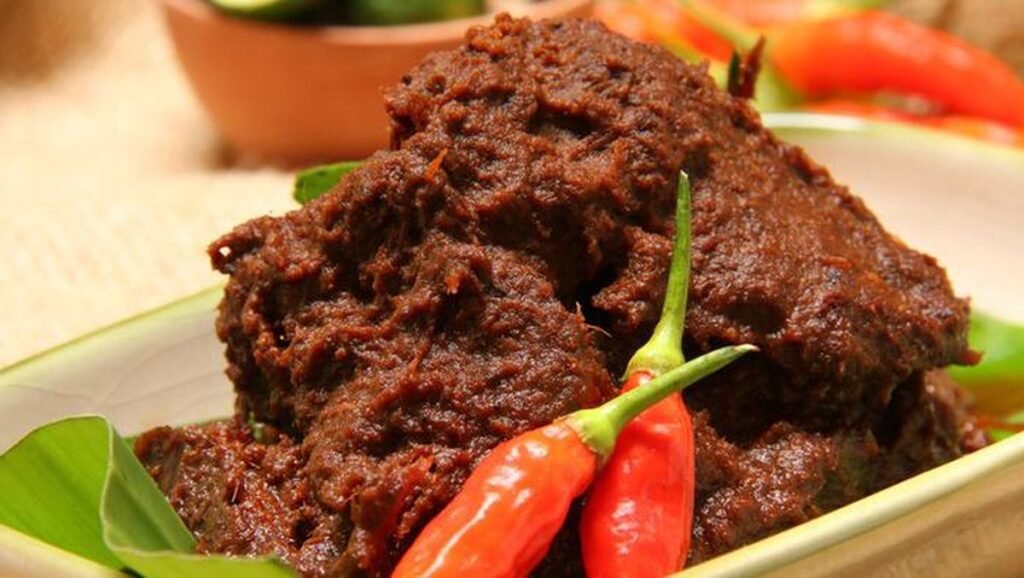
Visual? The glossy dark-brown coating that clings to the beef.
Kinesthetic? That soft, falling-apart texture when you press your spoon into it.
That’s the sensory power of Indonesian cuisine at its finest.
Let me tell you a tiny story. Once, while traveling in Sumatra, I joined a local family for a communal cooking session — the kind that starts early morning and ends when the sun is almost down. For hours, everyone was stirring the pot, laughing, telling stories. When the dish was finally done, one of the elders said, “Rendang sabar, rasa sabar.” Rendang with patience tastes like patience. And honestly? That line has stuck with me for years.
Why the World Calls Rendang from Indonesia the Most Delicious Food
When CNN crowned rendang as one of the world’s most delicious food, banyak orang penasaran. Why this dish? Why not something more globally famous?
Well… once you understand the technique and philosophy, the answer becomes very clear.
First, it hits every flavor note humans love: savory, spicy, slightly sweet, aromatic, creamy, and deeply umami. Yet it’s perfectly balanced.
Second, the cooking technique is genius. Slow-cooking until the liquid fully evaporates and the oils release creates a natural preservative — that’s why the dish can last for days without refrigeration. Pretty advanced for what people call traditional food, right?
Third, rendang has traveled. From the diaspora of Minang traders, it reached Malaysia, Singapore, Thailand, even parts of Europe. Everywhere it goes, people fall in love with it. That’s the universal appeal of rendang from Indonesia — it speaks a flavor language everyone understands.
And maybe one more reason: it feels like a hug. Warm, rich, grounding. Food that makes you stop for a second and go, Oh, wow.
How Rendang from Indonesia Becomes Cultural Storytelling in Every Bite
Here’s something most people don’t realize: rendang isn’t one single recipe. Ada versi basah, versi kering, versi pedas banget, versi yang lebih lembut… Each household in West Sumatra has its own version passed down like a family treasure.
This is where traditional food becomes living heritage.
When you’re eating rendang from Indonesia, you’re tasting centuries of migration, celebration, survival, and creativity. Every region — even every grandmother — has a slightly different twist. Some add kaffir lime leaves heavily. Some make it darker. Some use buffalo meat. Some make it extra dry so it lasts for long journeys.
If food is a language, rendang is poetry. Slow, profound, emotional.
A friend once told me, “Eating rendang feels like reading an old book — the kind with golden edges and a smell of history.”
You know what? She was right.
How to Truly Appreciate Rendang from Indonesia (Beyond Just Eating It)
If you want to fully enjoy rendang from Indonesia, here are a few things I learned from locals that change the whole experience:
Smell the spices before the first bite.
The aroma is half the story. It wakes up your senses like opening a window to a warm tropical morning.
Eat it with warm rice.
Don’t fight tradition — rendang was born to be enjoyed this way. The contrast of fragrant beef and fluffy rice is pure harmony.
Savor it slowly.
Rendang is patient food. It deserves patient eating. Let the richness coat your tongue. Notice how the spices bloom one by one.
Try different regional versions if you can.
Remember, there’s no single “standard” for rendang. Each variation expands your understanding of Indonesian cuisine.
And honestly? Try cooking it once in your life. You’ll realize why Indonesians view it with so much pride. The process alone teaches you discipline and intuition.
The Global Rise of Rendang from Indonesia
We’re living in a moment where the world is finally paying attention to Southeast Asian food — and rendang is leading the parade. It appears on Michelin-star menus, food festivals, cooking shows, and travel documentaries.
Chefs often describe it as “a masterpiece of slow cooking.” Some even call it a benchmark for flavorful dishes globally.
And what’s fascinating is this: although globalization usually dilutes traditional dishes, rendang goes the opposite way. Its authenticity is what makes people fall in love with it. That deep, soulful essence? Irreplaceable.
With this global love, rendang from Indonesia becomes more than a national treasure — it becomes a culinary ambassador.
Why You Need to Try Rendang from Indonesia at Least Once in Your Life
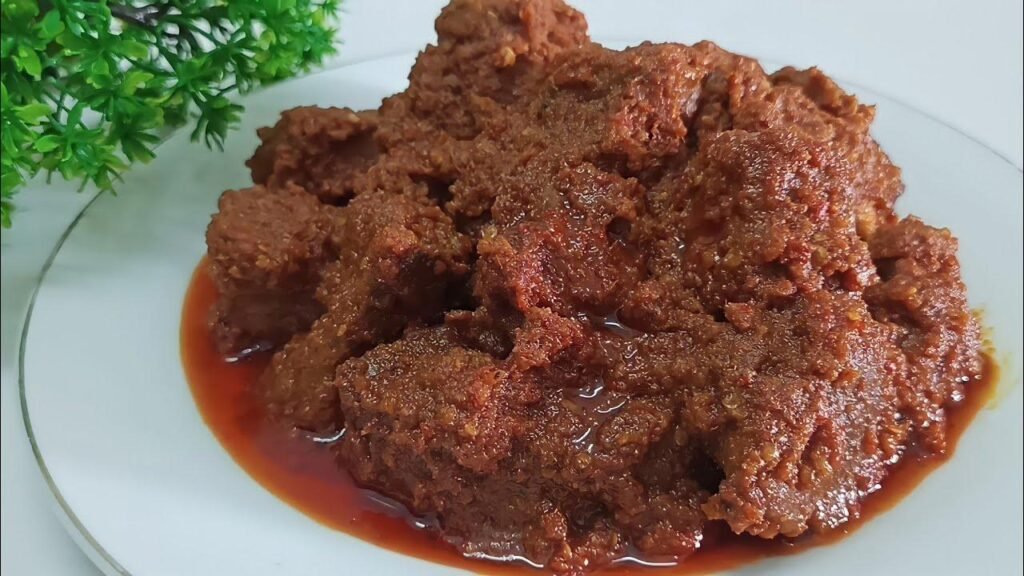
So here’s the truth — once you experience rendang from Indonesia, you’ll understand why people call it world’s most delicious food. You’ll feel why it’s a cornerstone of Indonesian cuisine. And maybe… you’ll fall in love a little bit with the culture behind it.
Rendang teaches patience. It teaches balance. It teaches appreciation for simple things transformed with care.
And if one day you find yourself eating this dish while the aroma fills your senses and the tender beef melts effortlessly — stop for a second. Smile.
You’re tasting a legacy.
Rendang from Indonesia isn’t just a dish. It’s a story. One worth revisiting again and again.