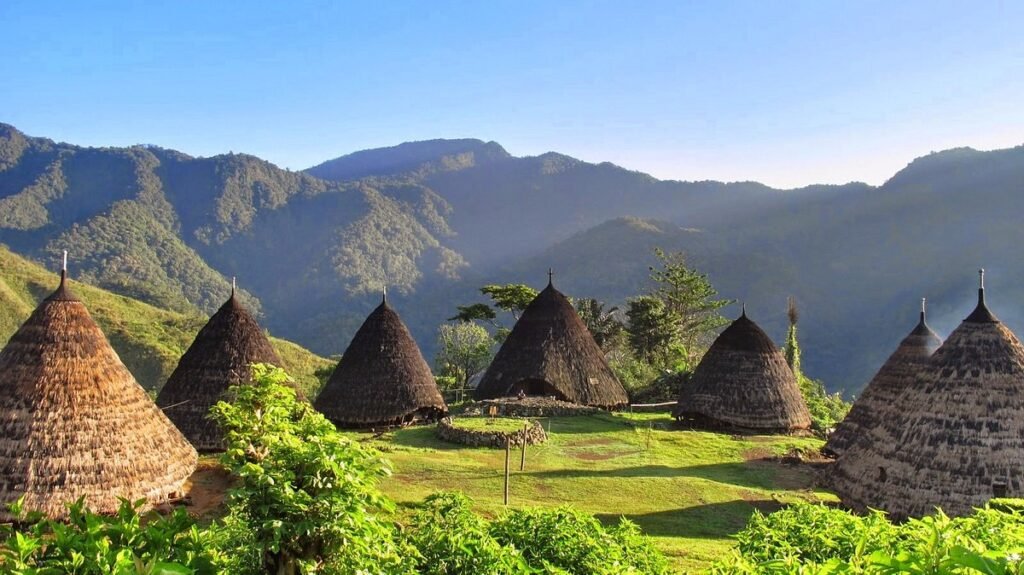
If you’re searching for a Wae Rebo guide, chances are you’ve already seen the photos — the dramatic cone-shaped houses rising from mist, mountains wrapping the village like a quiet secret. I was in the same position once, scrolling late at night, wondering whether it was really worth the effort. So let’s slow this down. This isn’t a polished brochure. It’s a grounded, slightly imperfect, human Wae Rebo guide — the kind I wish someone had handed me before I went.
Because here’s the thing: Wae Rebo traditional village isn’t just beautiful. It’s demanding. In a good way.
First, Let’s Talk About the Feeling
You don’t casually “drop by” Wae Rebo traditional village. It’s not like a café you stumble into. You decide to go. You prepare. You commit.
And somewhere along the road — maybe while leaving Labuan Bajo, maybe halfway through the bumpy drive toward Denge — you’ll feel that shift. The coastline disappears. The air changes. The road narrows. Conversations in the car become quieter.
It’s subtle. But noticeable.
A practical Wae Rebo guide will explain logistics. But what it won’t fully explain is how the village alters your pace. You arrive slower than you expected. And somehow, that feels correct.
How to Get to Wae Rebo from Labuan Bajo (Without Romanticizing It)
Let’s answer the practical question clearly: how to get to Wae Rebo from Labuan Bajo?
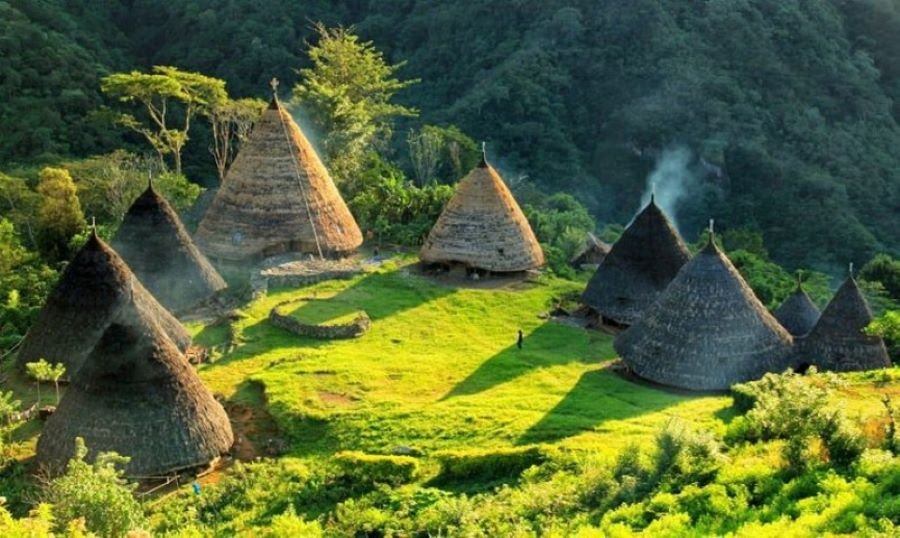
From Labuan Bajo, you’ll drive about four to five hours to Denge Village. The road can be rough in sections. Not dangerous, just… honest. Flores doesn’t smooth itself out for visitors.
From Denge, you trek roughly 2–3 hours uphill. It’s steady. Sometimes slippery. You’ll sweat. If it rained earlier, expect mud. If it’s dry season, expect dust.
There’s a moment about halfway up where you’ll probably pause. Not dramatically. Just to catch your breath. Maybe adjust your backpack. Maybe question your fitness level.
That’s normal.
A realistic Wae Rebo guide won’t pretend the hike is effortless. But it’s manageable if you take it slow. No rush. The village isn’t going anywhere.
Many Travelers Combine It with Sailing Labuan Bajo
Here’s a pattern I’ve noticed.
People come for sailing Labuan Bajo — turquoise waters, Komodo dragons, Padar Island viewpoints. Big landscapes. Wide skies. Salt in your hair.
Then someone mentions Wae Rebo.
At first, it feels like a completely different trip. Sea versus mountains. Dragons versus ancestral houses. But strangely, they complement each other. After days on open water, climbing into the highlands feels grounding.
If you’re planning both, I’d personally recommend doing the sailing Labuan Bajo trip first. Let your body enjoy the ocean. Then transition inland. The contrast makes Wae Rebo traditional village feel even more intimate.
And intimacy is the right word.
Entering Wae Rebo Traditional Village
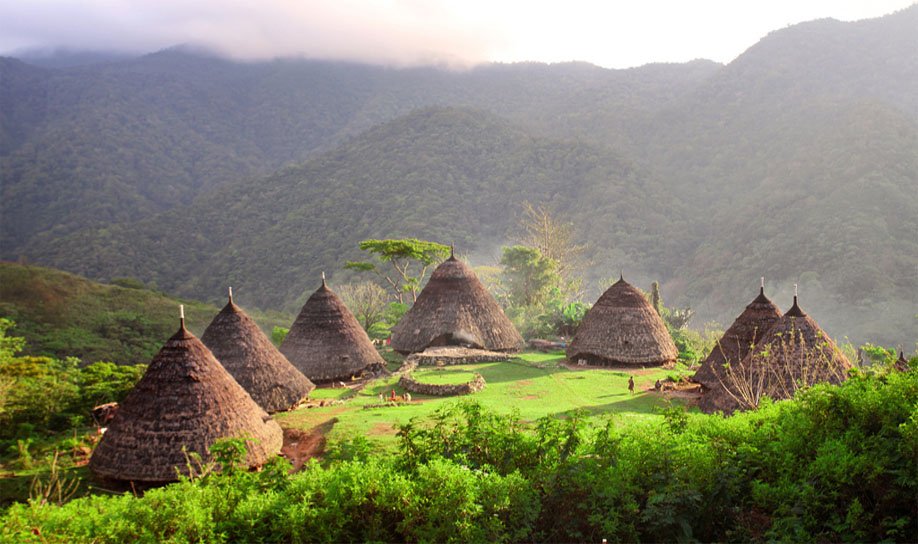
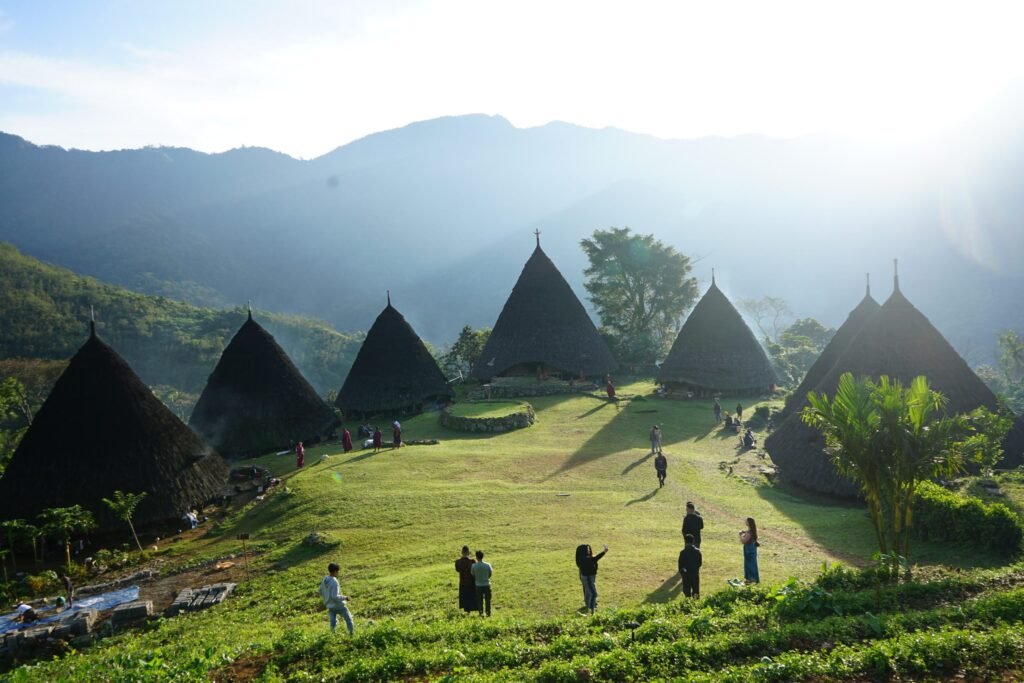
When you finally see the seven Mbaru Niang houses appear between trees, it doesn’t feel loud or dramatic. It’s quiet. Almost reserved.
Visitors participate in a welcoming ceremony before staying overnight. You sit cross-legged on woven mats. Coffee is served. An elder speaks.
There’s no rush.
I remember thinking how rare it is to be formally received somewhere. Not checked in. Received.
A thoughtful Wae Rebo guide will remind you: this is a living community, not an open-air museum. Families sleep inside those tall cone-shaped houses. Children grow up there. Elders tell stories there.
It’s their home first. Our experience second.
Staying Overnight: Simple, Shared, Surprisingly Warm
Most visitors spend one night inside one of the communal houses. Mattresses are arranged in a circle. Lighting is dim. Wooden beams arch overhead.
It’s not luxury. But it’s not uncomfortable either. It’s communal.
You’ll hear people shifting in their sleep. Maybe soft whispering before lights out. Maybe wind brushing against the roof.
There’s something grounding about that shared space. No private villa. No closed door separating you from others. Just presence.
And dinner? Rice. Vegetables. Sometimes eggs or chicken. Basic ingredients, cooked with familiarity.
I didn’t expect the food to linger in my memory, but it did. Not because it was fancy. Because of where I ate it.
That’s a detail many guides skip.
Best Time to Visit (And Why Weather Isn’t Everything)
Dry season between May and October is usually recommended. Trails are safer. Skies clearer.
But mist has its own personality.
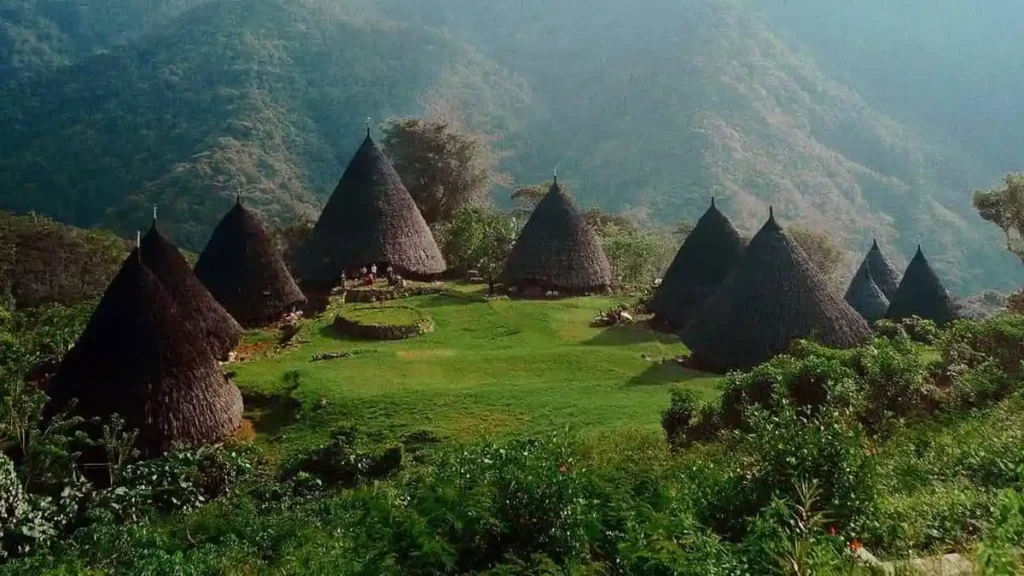
One morning, I woke up and couldn’t see the surrounding hills at all. Just fog weaving between rooftops. For a second, it felt like the village was floating.
Was it less “perfect” for photos? Maybe.
Was it more atmospheric? Absolutely.
A balanced Wae Rebo guide will tell you to prepare for both possibilities. Bring a light jacket. Evenings get cold. Yes, cold in Indonesia. It surprises people.
Physical Preparation: Honest Advice
Let’s not overcomplicate this.
You don’t need to be an athlete. But you should be comfortable walking uphill for a few hours.
Before my trip, I underestimated the humidity. I thought, “I hike sometimes, I’ll be fine.” And I was fine — just more humbled than expected. That’s something a local Wae Rebo guide later laughed about when I told him my story — apparently, almost everyone says the same thing after the first steep stretch.
Small tip: bring enough water. And pace yourself from the start instead of pushing hard early. The trail is forgiving if you respect it. If you’re unsure about the route or your stamina, hiring a Wae Rebo guide can make a real difference. They know when to slow down, where to rest, and how to read the weather before it shifts.
Sometimes we travel thinking everything should feel smooth. Wae Rebo doesn’t offer smooth. It offers meaningful. Walking with a Wae Rebo guide adds another layer to that meaning — stories about the village, the traditions, and the mountains that quietly surround you the whole way up.
Different thing.
Cultural Sensitivity: The Small Things Matter
Inside Wae Rebo traditional village, subtle gestures stand out more than big ones.
Dress modestly. Ask before photographing people. Keep your voice moderate, especially at night.
I noticed how softly conversations flowed in the village. No one seemed in a hurry to fill silence. That silence felt comfortable.
And it made me aware of how often I rush to speak elsewhere.
A good Wae Rebo guide isn’t only about maps and costs. It’s about mindset.
Costs and Contributions
Visitors contribute a fee that supports the community and maintenance of the traditional houses. Bring cash — there are no ATMs in the mountains.
Simple advice. Easy to forget.
Hiring local drivers and guides from Denge also helps distribute tourism income more fairly. It’s a small decision, but small decisions accumulate.
And when you think about it, preserving Wae Rebo traditional village isn’t just about architecture. It’s about sustaining the people who live there.
Is It Really Worth It?
Let’s sit with that question for a moment.
The drive is long. The hike is sweaty. The accommodation is simple.
So… worth it?
If you’re chasing comfort alone, maybe not. But if you’re curious about heritage, about experiencing Indonesia beyond beaches and boats, then yes.
The memory that stayed with me wasn’t a dramatic sunrise. It was sitting outside a Mbaru Niang house in late afternoon, watching clouds drift slowly across the valley. No Wi-Fi. No notification buzz.
Just stillness.
And when I returned to Labuan Bajo — back to restaurants, boats, conversations about the next sailing Labuan Bajo itinerary — I realized something subtle had shifted.
The mountain quiet stayed with me.
That’s why choosing the right Wae Rebo guide matters. Not to impress you with facts, but to prepare you emotionally and physically for a place that doesn’t perform for visitors.
If you’re currently figuring out how to get to Wae Rebo from Labuan Bajo, consider this your gentle nudge: go with patience. Lower your expectations for convenience. Raise your openness to experience.
Wae Rebo traditional village won’t overwhelm you with spectacle.
It will meet you softly.
And sometimes, the softest experiences are the ones that echo longest.