In the mountains of Flores, there is a place that feels slightly out of sync with modern travel expectations. Not in a dramatic way, more like a quiet refusal. People often first hear about Wae Rebo UNESCO after exploring Labuan Bajo, especially through sailing Labuan Bajo routes or an open trip Labuan Bajo itinerary that usually focuses on islands first. Then, almost as an afterthought, Wae Rebo UNESCO enters the conversation like a whisper that refuses to fade.
The strange thing is how quickly Wae Rebo UNESCO stops feeling like a destination and starts feeling like a memory you haven’t experienced yet. Even before arriving, travelers repeat Wae Rebo UNESCO without realizing it, almost like the phrase is trying to prepare them for something slower, heavier, more grounded than the sea routes they just left behind.
Somewhere between the coastline and the mountains, Wae Rebo UNESCO becomes less about geography and more about anticipation.
The Road That Doesn’t Behave Like a Tourist Route
Getting there is not straightforward. From Labuan Bajo, the journey often begins in comfort—boats, sea breeze, structured schedules from sailing Labuan Bajo tours or an open trip Labuan Bajo group. But the moment the route turns inland, everything becomes less predictable.
The road narrows. Conversations become shorter. And at some point, Wae Rebo UNESCO starts to feel less like information and more like a direction your body is trying to understand.
There are stretches where nothing particularly happens. Just trees, distance, a kind of green silence that feels slightly too complete. And still, Wae Rebo UNESCO keeps returning in your mind, not as excitement, but as a slow recognition that you are moving toward something that does not care about urgency.
Then the climb begins.
It is not the kind of climb people brag about. It’s humid, uneven, sometimes confusing. You stop, you continue, you question why you’re even counting steps. And yet, Wae Rebo UNESCO keeps repeating itself internally, like a quiet reminder that you are not lost, just not finished yet.

A Village That Doesn’t Adjust Itself for Visitors
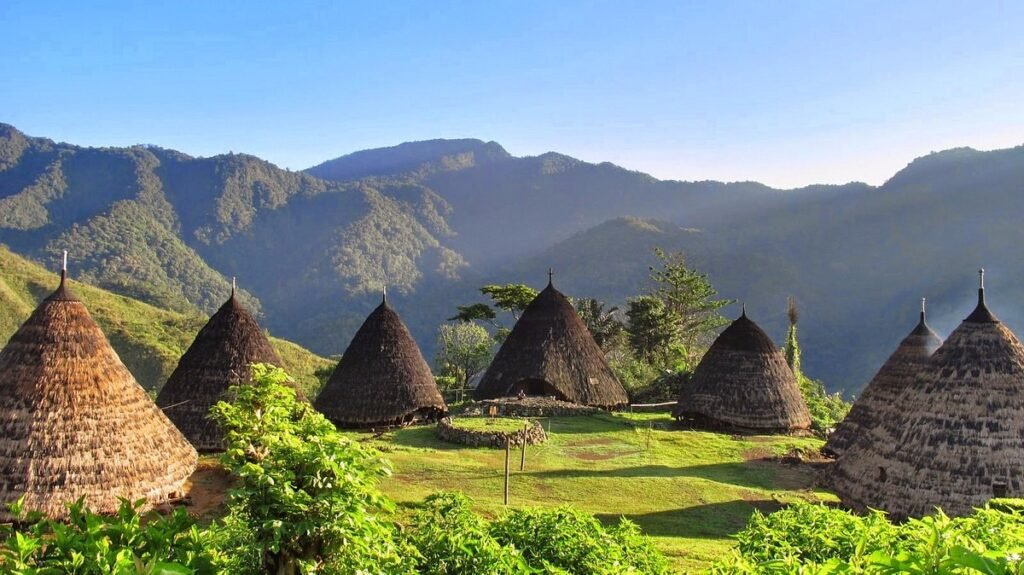
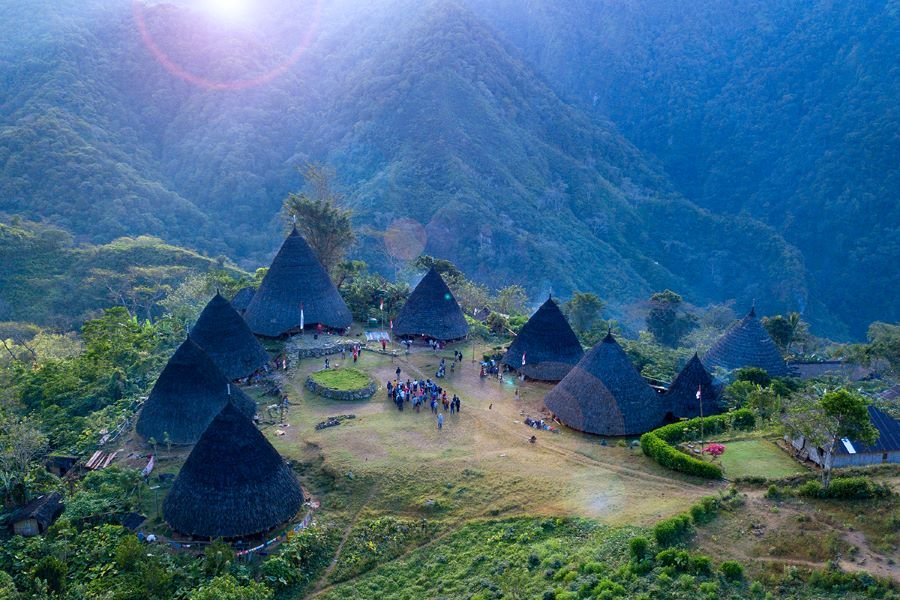
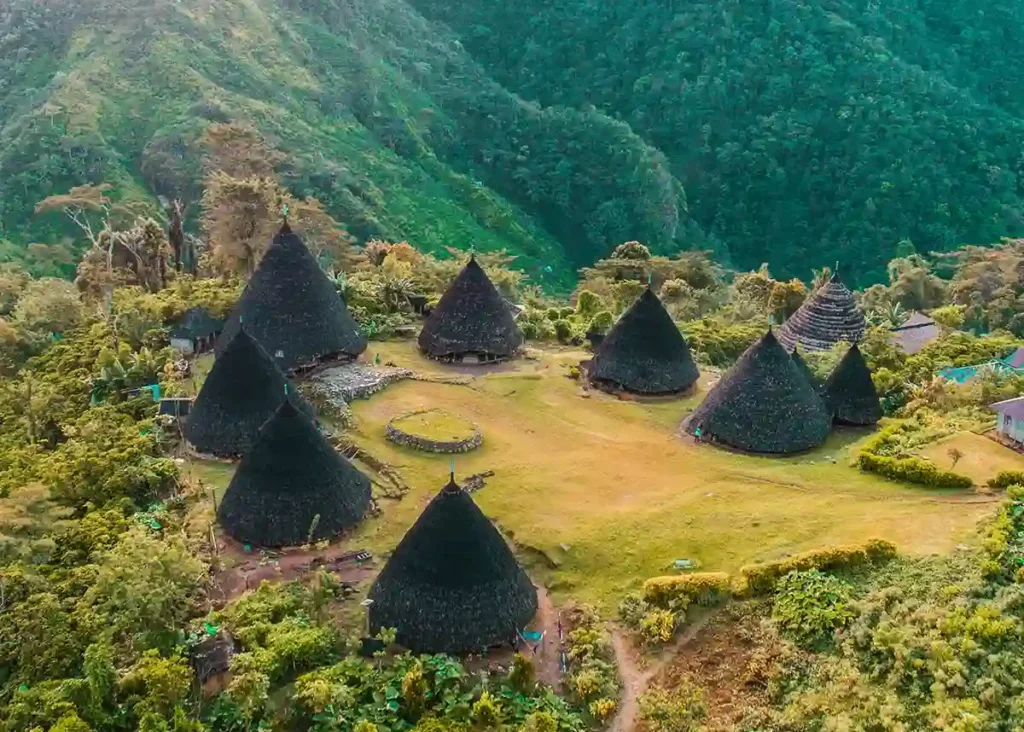
When the traditional cone houses of the Wae Rebo traditional village finally appear, there is no dramatic reveal. No music. Just presence.
And maybe that is why Wae Rebo UNESCO feels different compared to other heritage sites. It doesn’t try to scale itself for visitors. It simply continues existing.
People sometimes expect something curated. But what they find is daily life that happens to be witnessed. Firewood being carried. Simple greetings. A rhythm that doesn’t speed up just because someone arrived.
In those first moments, Wae Rebo UNESCO feels almost too quiet to interpret properly. You might even feel a bit unsure whether you’ve arrived somewhere important or just stepped into someone else’s normal day.
Later, you realize that uncertainty is part of it.
Recognition That Arrived Quietly, Not Loudly
The village received international attention when it earned the UNESCO Asia-Pacific Heritage Conservation Award in 2012. That moment placed Wae Rebo UNESCO into global heritage discussions, but interestingly, nothing about the village itself seemed to react.
No visible shift. No architectural change. No sudden performance of identity.
And yet, Wae Rebo UNESCO became a phrase that started appearing in travel stories more frequently, often after journeys that began in Labuan Bajo or after sailing Labuan Bajo experiences that brought visitors close but not yet inside the mountains.
There is something slightly ironic here. Recognition came, but life did not adjust itself around it.
And maybe that is the most honest part of Wae Rebo UNESCO.
The Feeling of Time Moving Differently
Time behaves strangely in the village. Not in a mystical way, just… less organized.
Morning doesn’t rush into afternoon. Afternoon doesn’t feel like progress. It just continues.
And in that space, Wae Rebo UNESCO starts appearing less as a label and more like a background thought that never fully disappears.
Sometimes you sit and realize you’ve been quiet longer than expected. Not because you are trying to be respectful, but because speech feels unnecessary.
Then suddenly you remember Wae Rebo UNESCO again, like your mind is checking if the experience is still real.
The Journey Back Feels Slightly Misplaced
Leaving is harder to explain than arriving. The descent feels faster, but not lighter emotionally.
You pass through the same forest, but it doesn’t feel identical. You start thinking again about Labuan Bajo, about sailing Labuan Bajo or that open trip Labuan Bajo plan that started everything.
And somewhere in between, Wae Rebo UNESCO keeps echoing, but differently now. Less like curiosity, more like something unfinished.
It doesn’t ask you to stay. It just doesn’t leave your thoughts as quickly as other places do.
A Heritage That Lives Without Performing Heritage
The houses of the Wae Rebo traditional village are often described as cultural icons, but that feels too clean a description once you are actually there.
They are not symbols first. They are homes first.
And in that reality, Wae Rebo UNESCO becomes slightly paradoxical. It is globally recognized, yet locally ordinary. It is preserved, yet not frozen.
People cook, talk, rest, repeat routines that have nothing to do with tourism expectations. And still, visitors keep trying to frame Wae Rebo UNESCO into something explainable.
It resists that framing, quietly.
Why It Stays in Memory Longer Than Expected
Some places fade after you leave. This one doesn’t behave that way.
Even days later, while already back near Labuan Bajo, while hearing someone mention sailing Labuan Bajo or planning another open trip Labuan Bajo, Wae Rebo UNESCO still appears in small interruptions of thought.
Not as a full memory. More like fragments.
A sound. A slope. Smoke rising without explanation.
And each fragment carries the same phrase again—Wae Rebo UNESCO, though now it feels less like repetition and more like residue.
Ending That Doesn’t Really End
There is no clean conclusion to a place like this. Even the word “visit” feels too final.
You leave, yes. You return to roads, boats, schedules, plans. But Wae Rebo UNESCO doesn’t behave like something you finished.
It stays slightly active in the background of memory, especially when you think again about Labuan Bajo or remember the sea routes of sailing Labuan Bajo and open trip Labuan Bajo journeys.
And maybe that’s enough. Not understanding it completely. Just letting Wae Rebo UNESCO remain as something that doesn’t fully settle.
Because some places are not meant to be resolved. Only remembered, unevenly, imperfectly.